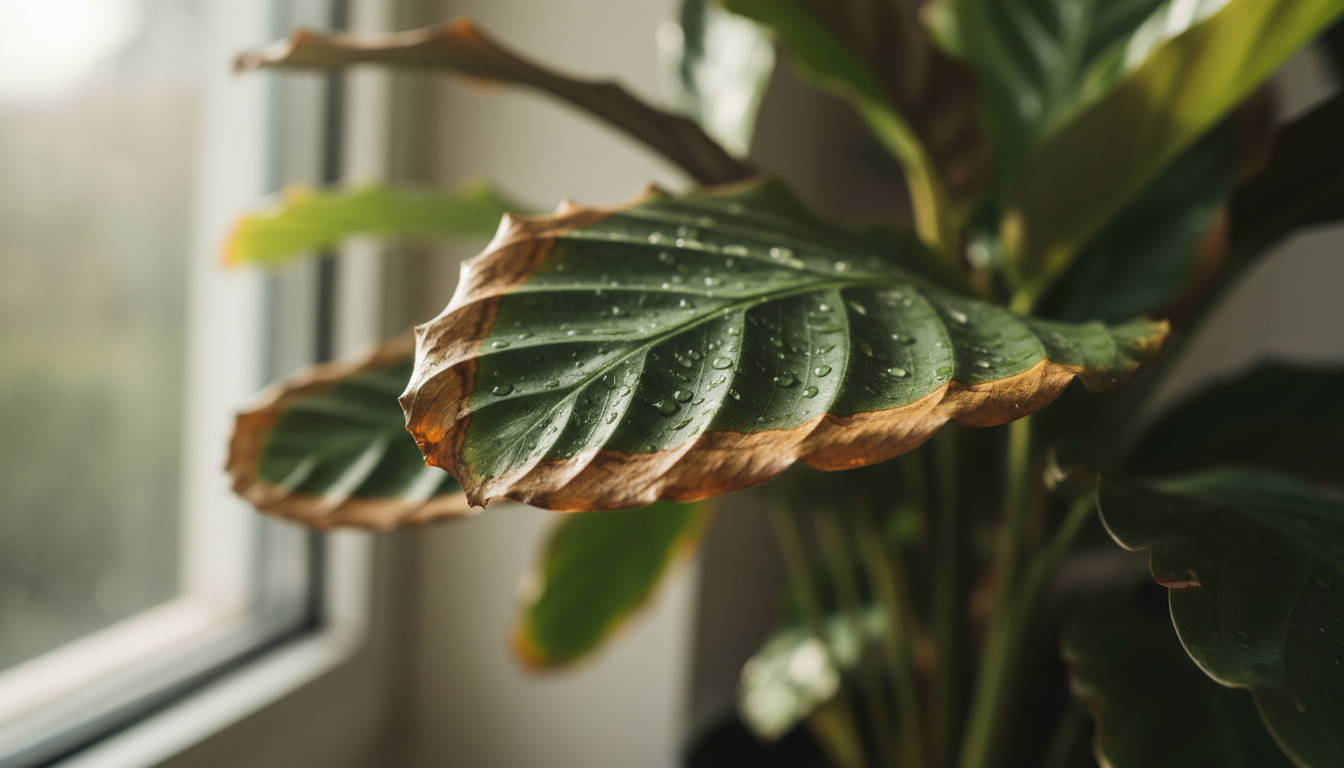
Brown Leaf Tips: Causes and Solutions
Why Do Plants Get Brown Leaf Tips?
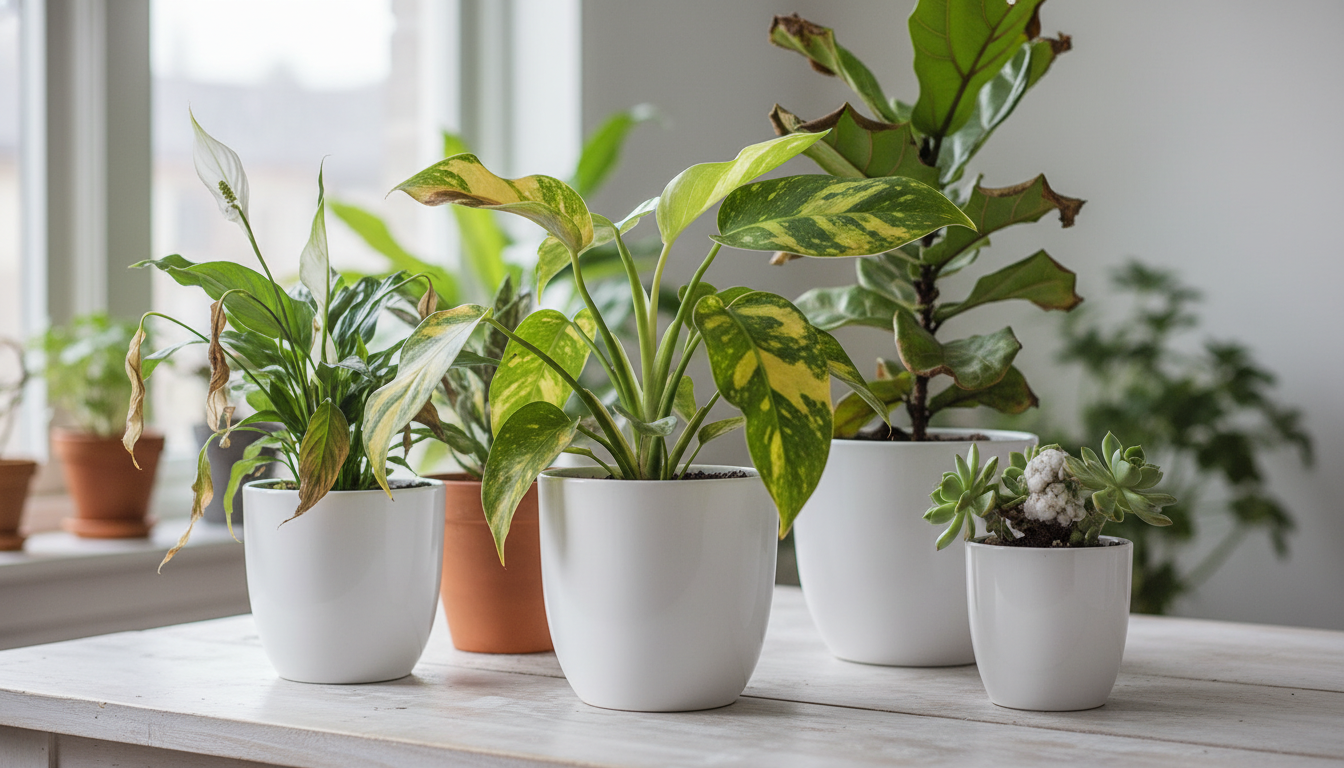
Brown leaf tips are a common problem faced by many plant enthusiasts. Understanding the causes of this phenomenon will help you keep your green friends healthy and beautiful. Let's break down the main factors that can lead to brown edges on leaves.
1. Lack of Moisture
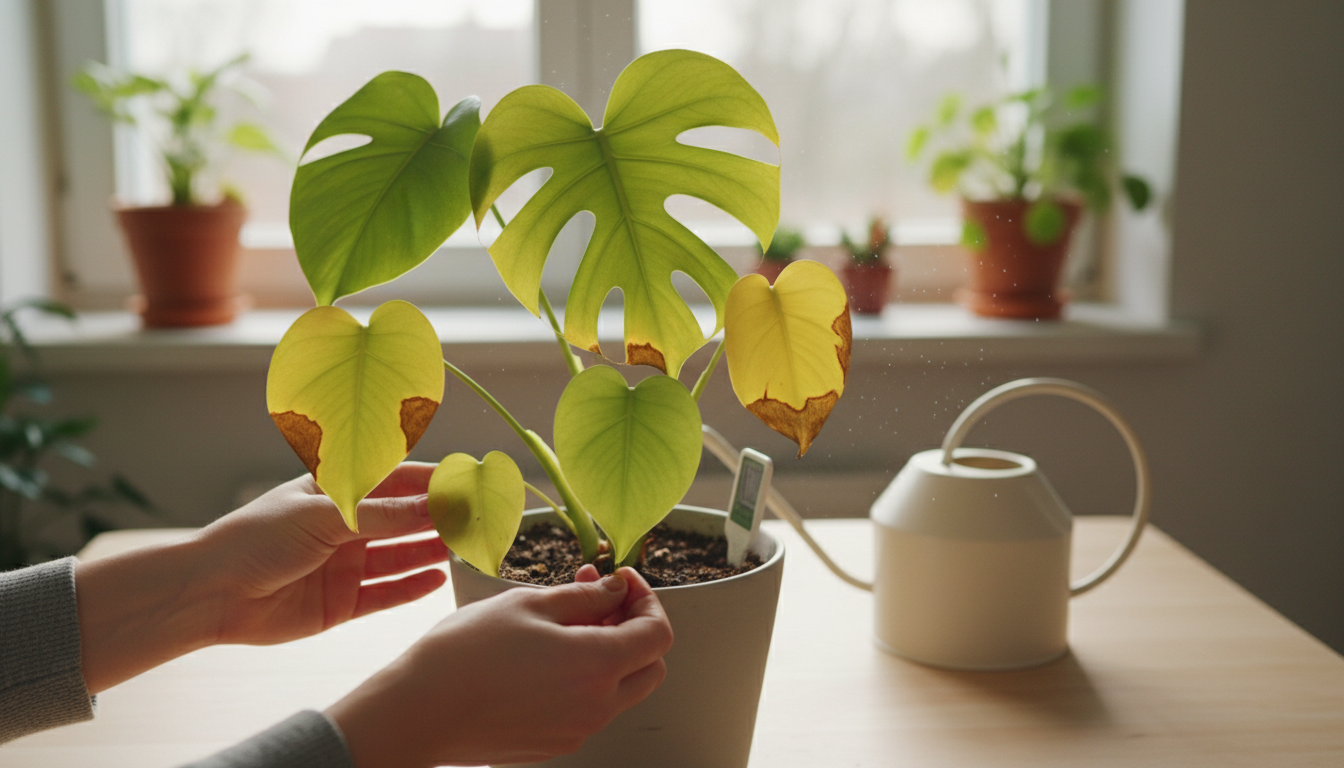
One of the most frequent causes of brown tips is a lack of water. If a plant does not receive enough moisture, its leaves begin to dry out.
Tip: Check the soil moisture level, especially during warm weather. Ensure that your pot has drainage holes to avoid water stagnation.
2. Overwatering
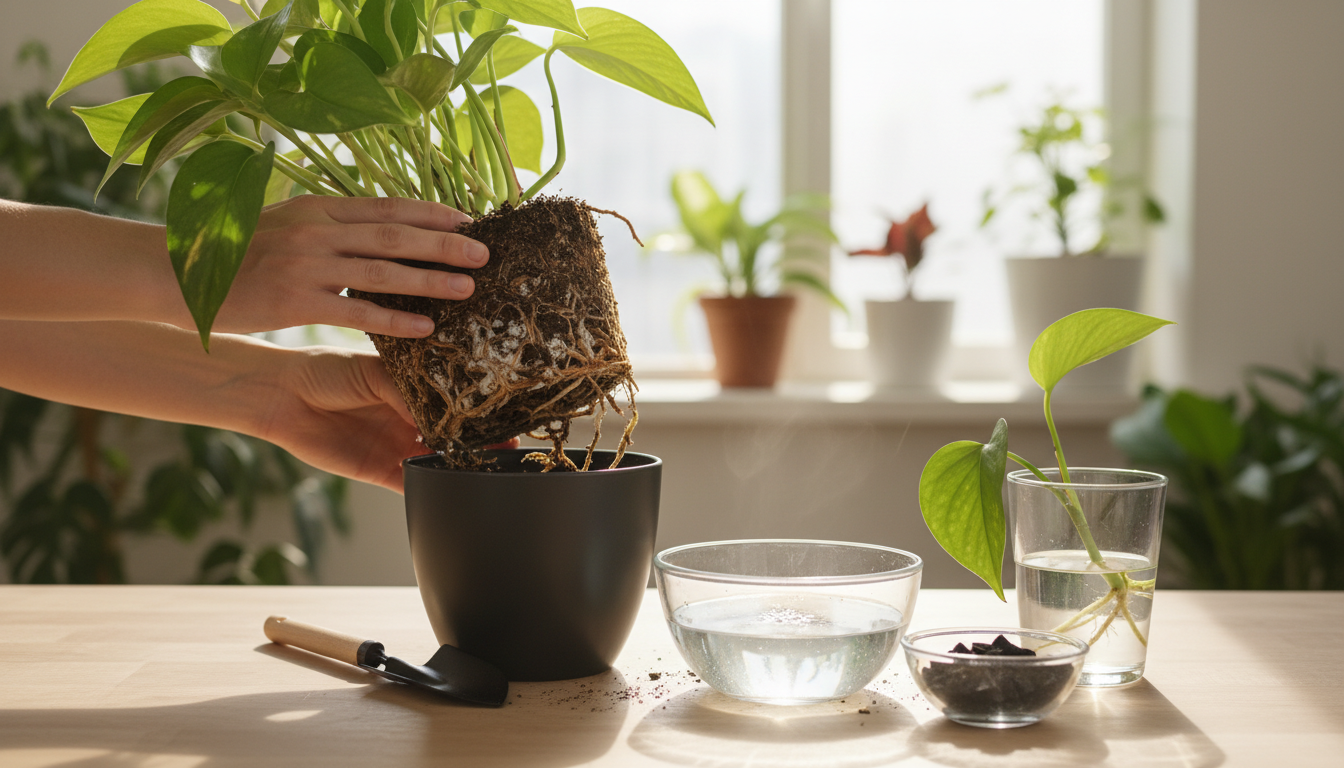
On the other hand, too much water can also cause problems. Overwatered soil leads to root rot, which negatively affects the condition of the leaves.
Tip: Allow the top layer of soil to dry out a bit before the next watering. Use specialized soils for your type of plant to improve drainage.
3. Nutrient Deficiency
A lack of essential nutrients, such as nitrogen, potassium, or magnesium, can also cause yellowing and brown tips.
Tip: Fertilize your plants with nutrients suitable for their species, following the recommendations on the packaging.
4. High Temperature and Dry Air
Excessively high temperatures and low humidity indoors can lead to leaf drying. This is especially relevant in winter when heating systems dry out the air.
Tip: Regularly mist the leaves of your plants or use a humidifier to maintain optimal humidity levels.
5. Pests and Diseases
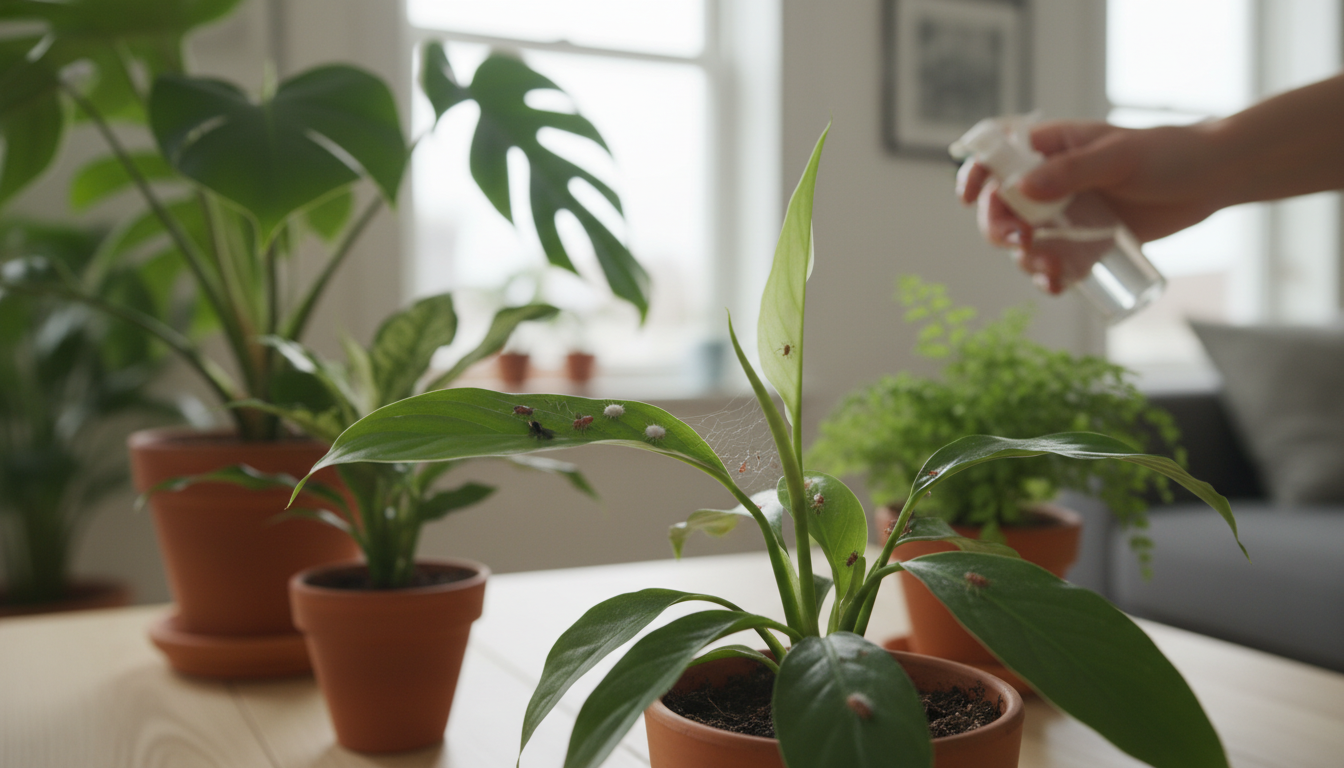
Some pests, such as spider mites or scale insects, can also cause brown leaf tips. Additionally, fungal infections can lead to similar symptoms.
Tip: Regularly check your plants for pests and diseases. Use insecticides or fungicides if necessary.
By following these recommendations, you can prevent the appearance of brown tips on leaves and maintain the health of your plants. Remember that each plant is unique, and it is important to consider its individual needs.
How Does Watering Affect Leaf Health?
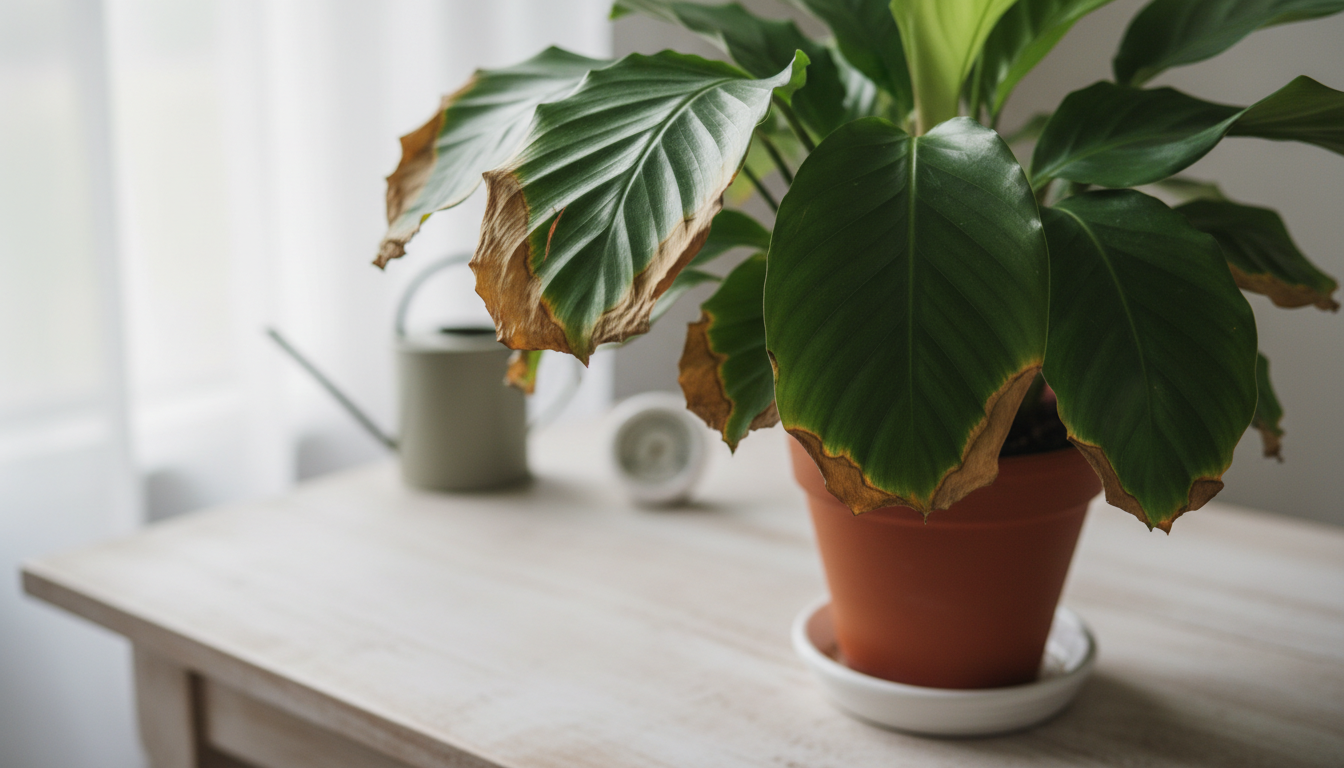
Watering is one of the key factors affecting the health of your plants. Proper watering not only helps avoid brown tips on leaves but also contributes to the overall well-being of your green friends. Let's look at how watering affects leaf condition and how to avoid common mistakes.
1. Water as a Source of Life
Plants, like all living organisms, need water to perform their life functions. Water helps transport nutrients from the soil to the leaves and is also involved in photosynthesis.
- Lack of Water: If a plant does not receive enough moisture, its leaves begin to lose turgor and dry out, leading to the formation of brown tips.
- Excess Water: Overwatered soil can cause root rot, which also negatively affects leaf condition.
2. How to Determine the Right Amount of Water?
To understand how much water your plant needs, pay attention to the following tips:
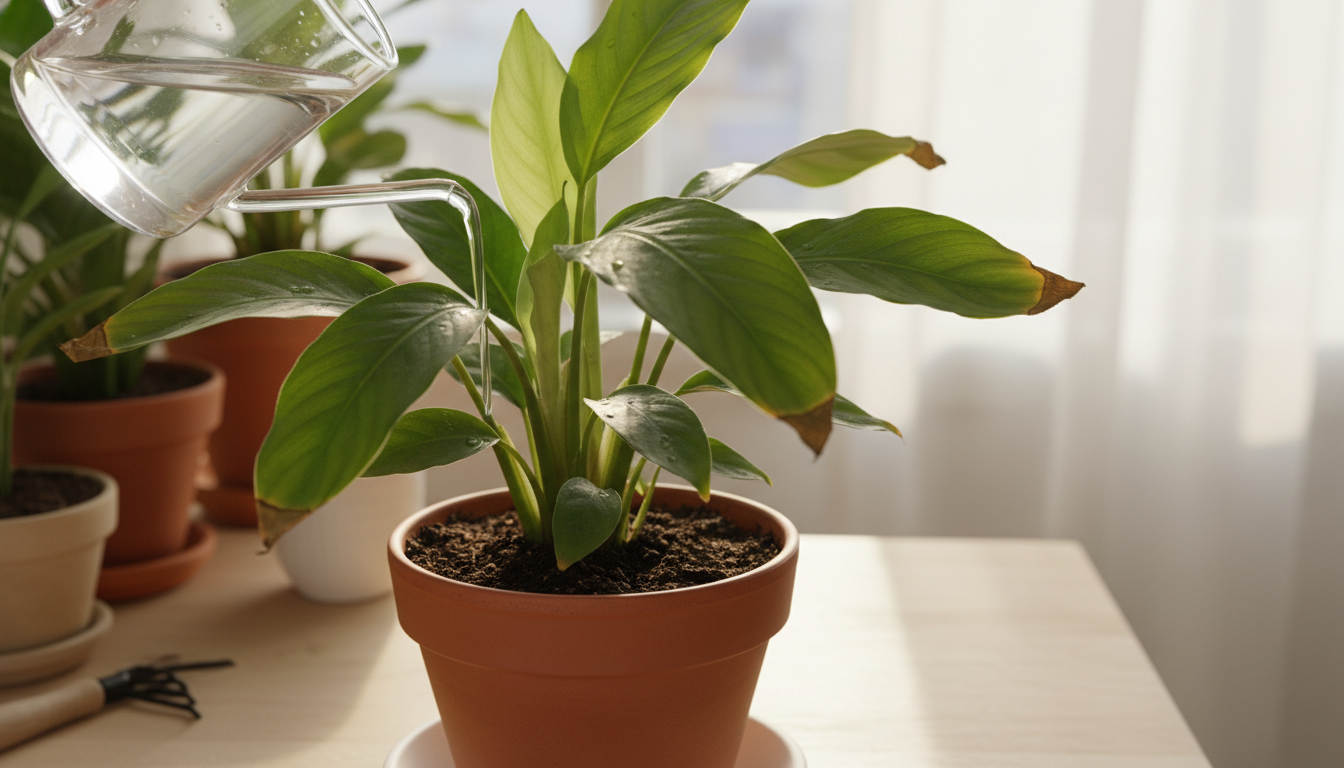
- Check Soil Moisture: Insert your finger into the soil to a depth of about 2-3 cm. If it is dry, it's time to water.
- Consider the Season: In summer, plants require more water than in winter.
- Pot Size and Plant Type: Larger plants in larger pots require more water than smaller ones in smaller pots.
3. Proper Watering
Here are some recommendations for proper watering:
- Water plants in the morning or evening to avoid rapid evaporation of water.
- Use room temperature water to avoid shocking the roots.
- Ensure that water drains well to avoid stagnation.
By following these simple recommendations, you can maintain the health of your plants and prevent the appearance of brown tips on leaves. Remember that each plant is unique, and it is important to consider its individual water needs!
Temperature Fluctuations and Their Impact
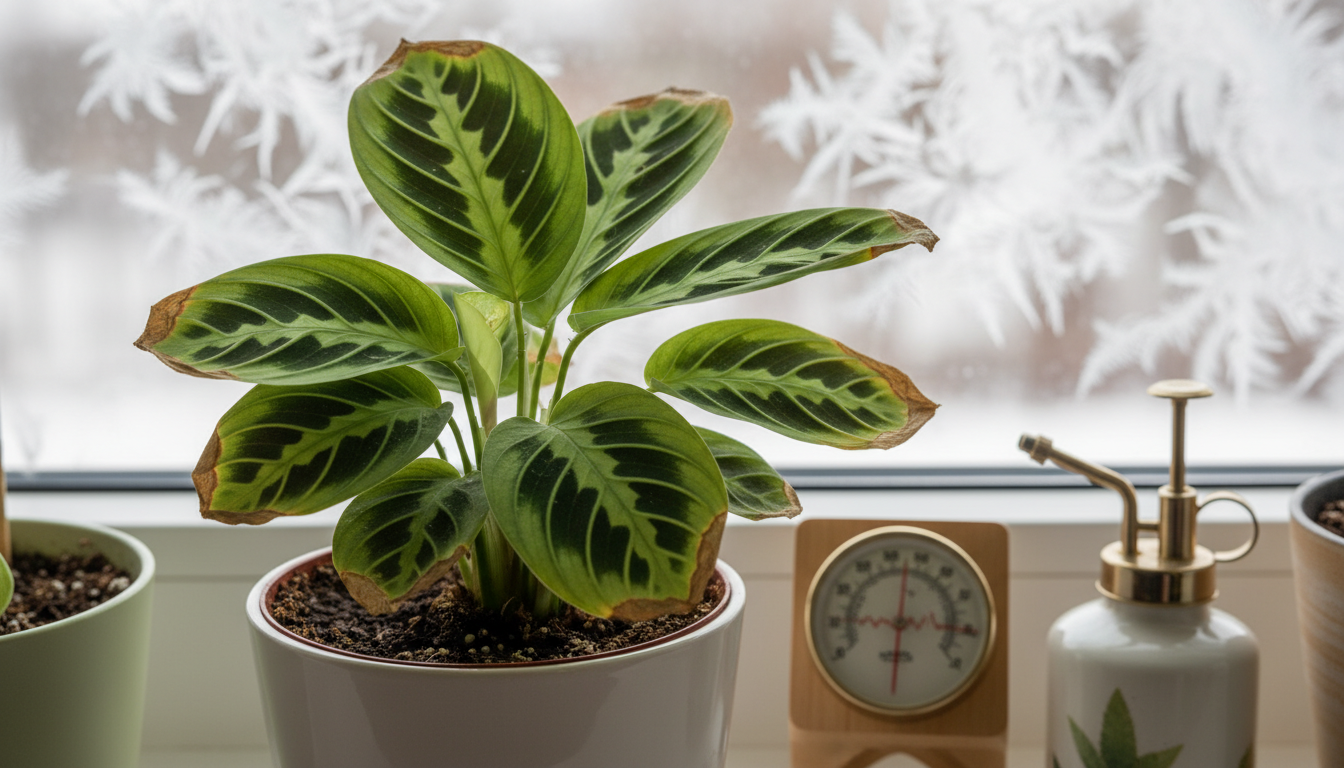
Air temperature is one of the key factors affecting plant health. Brown leaf tips can be a sign that your plant is experiencing stress due to sharp temperature changes. Let's take a closer look at how temperature can affect the condition of your green friends.
1. Optimal Temperature Range
Each plant has its temperature preferences. For example, tropical plants require warmer conditions, while succulents can tolerate cooler temperatures.
Tip: Research the characteristics of your plant and create comfortable conditions for it.
2. Sharp Temperature Changes
Plants can suffer from sharp temperature fluctuations, especially if they are near windows or doors where cold air can quickly enter the room. This can lead to the drying of leaf edges.
Tip: Avoid placing plants in drafty areas. If you open a window, make sure your plants are safe.
3. The Impact of Heating Devices
In winter, heating devices can significantly lower humidity levels indoors, which also leads to brown tips. Dry air is a serious stress factor for most plants.
Tip: Use a humidifier or place trays of water near your plants to increase humidity levels.
4. Summer Heat
Summer temperatures can be equally dangerous. If a plant is in the sun on a hot day, it can lead to overheating and leaf drying.
Tip: Provide shade for the plant on hot days or move it to a cooler location.
5. Maintaining Stable Temperature
Temperature stability is key to your plant's health. Try to avoid sharp changes, especially at night.
Tip: Place a thermometer in the room to monitor the temperature and adjust conditions as needed.
By following these recommendations, you can create a comfortable atmosphere for your plants and prevent the appearance of brown tips on leaves. Remember that caring for temperature conditions is an important step towards the health of your green friends!
The Role of Fertilizers in Leaf Health
Fertilizers play a key role in maintaining the health of your plants and preventing the appearance of brown tips on leaves. Proper nutrition provides plants with all the necessary elements, promoting their growth and development. Let's take a closer look at how fertilizers affect leaf health and how to use them correctly.
1. Why Are Fertilizers Needed?
Plants need various nutrients for normal functioning. The main ones include:
- Nitrogen (N): Promotes leaf and green mass growth.
- Phosphorus (P): Involved in root formation and flowering.
- Potassium (K): Strengthens plants and increases their resistance to stress.
A deficiency of these elements can lead to various problems, including yellowing and brown tips on leaves.
2. How to Choose Fertilizers?
When choosing fertilizers, it is important to consider your plant type and its needs. Here are some tips:
- Read Labels: Pay attention to the NPK ratio (nitrogen, phosphorus, potassium) on the packaging. Choose fertilizers suitable for your plant.
- Seasonality: Different times of the year may require different fertilizers. For example, in spring and summer, they need more nitrogen for active growth.
3. How to Fertilize Plants Properly?
Here are some recommendations for fertilizing:
- Don’t Overdo It: Too much fertilizer can harm plants. Follow the instructions on the packaging.
- Regularity: Fertilize plants according to their needs. This usually occurs every 4-6 weeks during the active growth period.
- Water: Fertilizers are best absorbed when the soil is moist. Water the plants before applying fertilizers.
4. Signs of Nutrient Deficiency
Pay attention to the following symptoms that may indicate a lack of nutrients:
- Yellowing of Leaves: This may be a sign of nitrogen deficiency.
- Weak Growth: If your plant is not growing as it should, it may be lacking nutrients.
- Brown Tips: This may indicate a deficiency of potassium or other micronutrients.
By following these recommendations and choosing fertilizers correctly, you can maintain the health of your plants and prevent the appearance of brown tips on leaves. Remember that each plant is unique, and it is important to consider its individual nutrient needs!
How to Increase Humidity Levels Indoors?
Maintaining optimal humidity levels indoors is a key aspect of plant care. A lack of moisture can lead to brown tips on leaves and other problems. Here are some ways to increase humidity for your green friends.
1. Humidifiers
Using humidifiers is one of the most effective ways to increase humidity indoors. They evenly distribute moisture and maintain a comfortable level for plants.
Tip: Choose a humidifier with adjustable humidity levels to adapt it to your plants' needs.
2. Water Trays
Place trays of water near your plants. As the water evaporates, it increases the humidity around them.
Tip: Add pebbles to the bottom of the tray so that pots do not sit directly in water, preventing root rot.
3. Grouping Plants
Gather plants together. They will evaporate moisture, creating a more humid atmosphere around themselves.
Tip: Choose plants with similar humidity requirements to create comfortable conditions for all.
4. Frequent Watering
Regular watering also helps maintain humidity levels. However, it is important to ensure that you do not overwater the soil.
Tip: Water plants in the morning or evening to minimize moisture evaporation.
5. Using Sprays
Misting leaves with water is a simple way to increase humidity. However, this is not suitable for all plants, as some may be sensitive to moisture on their leaves.
Tip: Check how your plant responds to misting and use this method only for those that enjoy it.