6 Common Pests of Houseplants and How to Combat Them
Main Pests of Houseplants
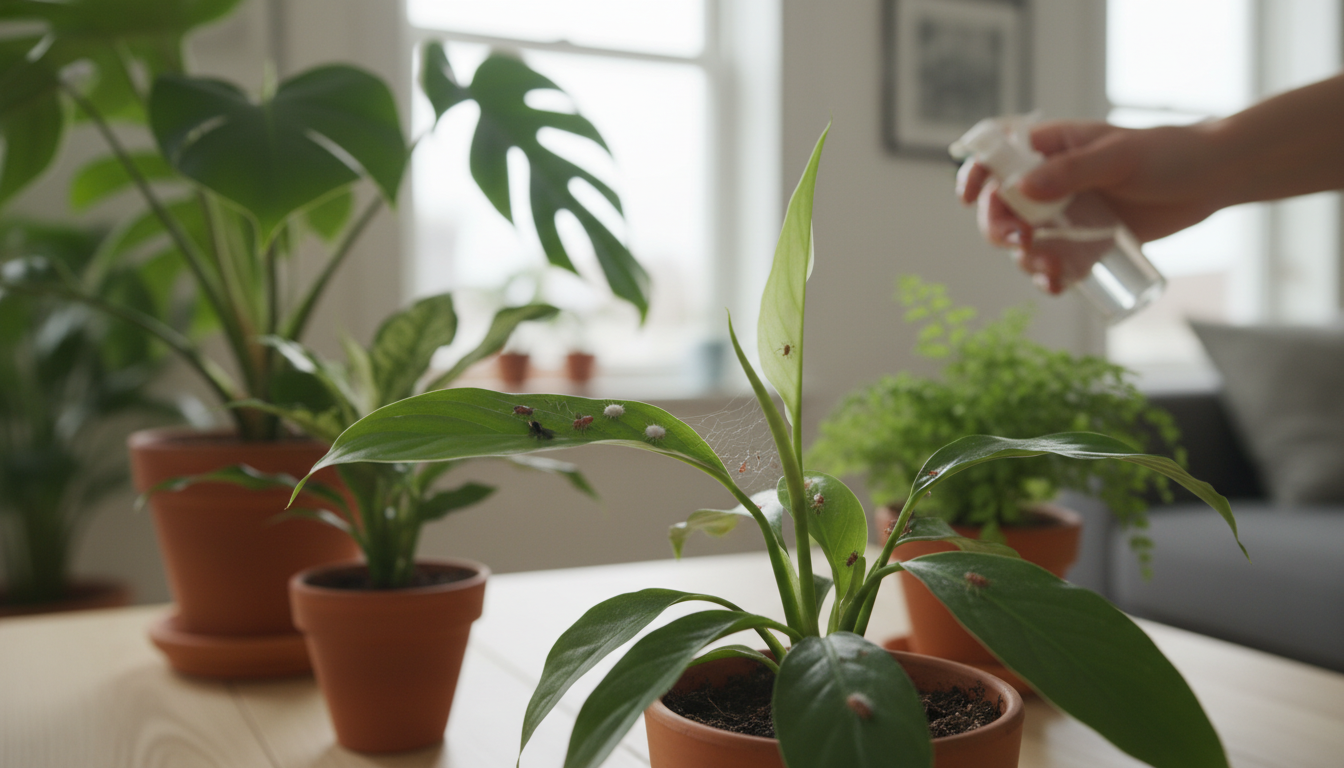
Houseplants can fall victim to various pests that can cause significant damage. In this section, we will look at the most common pests, their signs, and the plants that are most often affected by their attacks.
Aphids
Aphids are small insects that can be green, black, or yellow. They usually gather on the underside of leaves and stems. Signs of infestation:
- Curling or yellowing leaves
- Sticky residue on leaves (honeydew)
- Appearance of black sooty mold
How to combat aphids:
- Rinse the plants under a stream of water to wash off the insects.
- Use plant soap or insecticidal sprays, following the instructions on the package.
Spider Mites
Spider mites are microscopic insects that leave fine webs on leaves. They are hard to notice, but here’s what to look for:
- Tiny spots on leaves
- Appearance of webs, especially in the corners of leaves
- Wilting and yellowing leaves
Ways to combat them:
- Regularly mist the plants with water to increase humidity and make it harder for mites to thrive.
- Use acaricides or natural remedies like garlic extract.
Thrips
Thrips are another type of small pest that can damage leaves and flowers. Signs include:
- Silvery streaks on leaves
- Deformation of flowers
- Black spots on leaves (thrips droppings)
How to get rid of thrips:
- Remove affected leaves and flowers.
- Use insecticidal soaps or special sprays for thrips.
Helpful Tips
- Regularly check your plants for pests.
- Maintain cleanliness around the plants by removing fallen leaves and debris.
- Isolate new plants for a while to prevent the spread of pests.
Protecting your houseplants from pests is an important step towards their health and beauty. By following these recommendations, you can keep your plants in excellent condition!
How to Identify the Presence of Pests
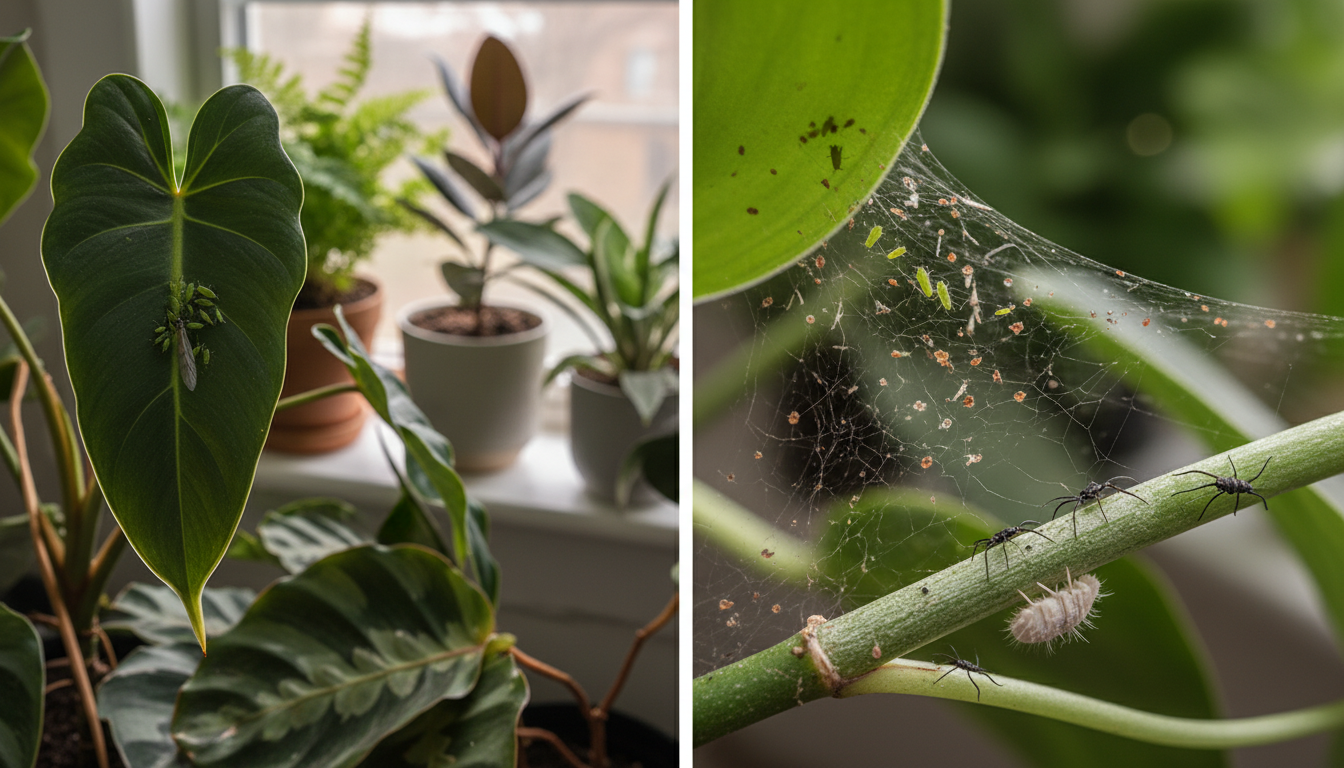
Detecting pests on houseplants is an important aspect of their care. The sooner you notice a problem, the easier it will be to deal with it. Here are some tips to help you with this.
Signs of Damage
Pay attention to the following signs that may indicate the presence of pests:
- Color changes in leaves: If the leaves start to yellow or take on unusual shades, it may signal a problem.
- Deformation of leaves: Curled or twisted leaves may indicate an attack by aphids or other pests.
- Sticky residue: If you notice stickiness on the leaves, it may be honeydew left by aphids.
- Webbing: The presence of fine webs, especially in the corners of leaves, often indicates spider mites.
- Tiny spots or stains: Silvery streaks on leaves may indicate thrips.
Regular Checks
Conducting regular checks of your plants will help identify pests at an early stage. Here are some tips:
- Inspect plants weekly: Pay attention to the underside of leaves and stems, where insects often hide.
- Use a magnifying glass: This will help you spot tiny pests like spider mites and thrips.
- Monitor the environment: Changes in conditions such as humidity and temperature can promote pest emergence.
Helpful Tips
- Maintain cleanliness: Regularly remove fallen leaves and debris to avoid attracting pests.
- Isolate new plants: Keep new plants away from others for a while to prevent the spread of potential pests.
- Check neighboring plants: If one plant is infested, check all others for signs of pests.
By following these recommendations, you can effectively identify pests and protect your houseplants. Caring for plant health is key to their beauty and longevity!
Natural Ways to Combat Pests
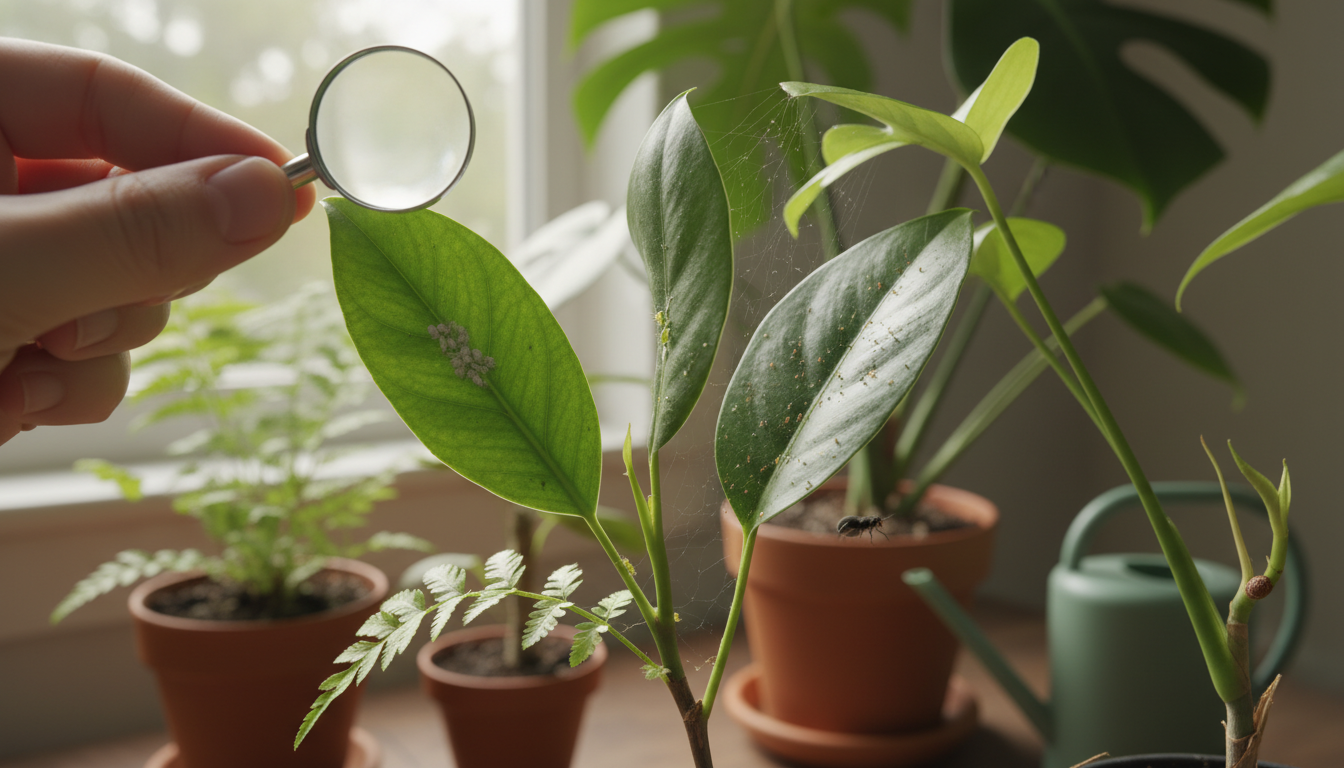
When it comes to combating pests on houseplants, natural methods can be just as effective as chemical ones. They are safe for you and the environment, and are often accessible and easy to use. Let’s look at some popular methods that can help you protect your green friends.
Plant Soap
One of the simplest and most accessible remedies is regular soap. It helps eliminate insects like aphids and thrips. Here’s how to use it:
- Prepare the solution: Dissolve 1-2 tablespoons of soap in a liter of water.
- Spray the plants: Apply the solution to the leaves and stems, especially on the underside where pests hide.
- Repeat treatment: Conduct treatments every 7-10 days until the problem is resolved.
Neem Oil
Neem oil is another effective natural remedy. It has insecticidal properties and helps combat various pests.
- Prepare the solution: Mix 2 tablespoons of neem oil with a liter of water and add a few drops of soap for better adhesion.
- Treat the plants: Spray the plants every 2-3 weeks to prevent re-infestation.
Garlic Extract
Garlic is not only useful in cooking but also effective against pests. Its smell repels many insects.
- Prepare the extract: Crush 5-6 cloves of garlic and soak them in 1 liter of water. Let it steep for 24 hours.
- Strain: Strain the solution and use it to spray the plants.
Helpful Tips
- Regular checks: Inspect plants for pests and treat them at the first signs of trouble.
- Mixed methods: Use several methods simultaneously for increased effectiveness.
- Maintain plant health: Healthy plants are less susceptible to pest attacks, so pay attention to proper care.
By following these natural methods, you can protect your houseplants from pests and maintain their health and beauty.
Chemical Preparations: When to Use Them
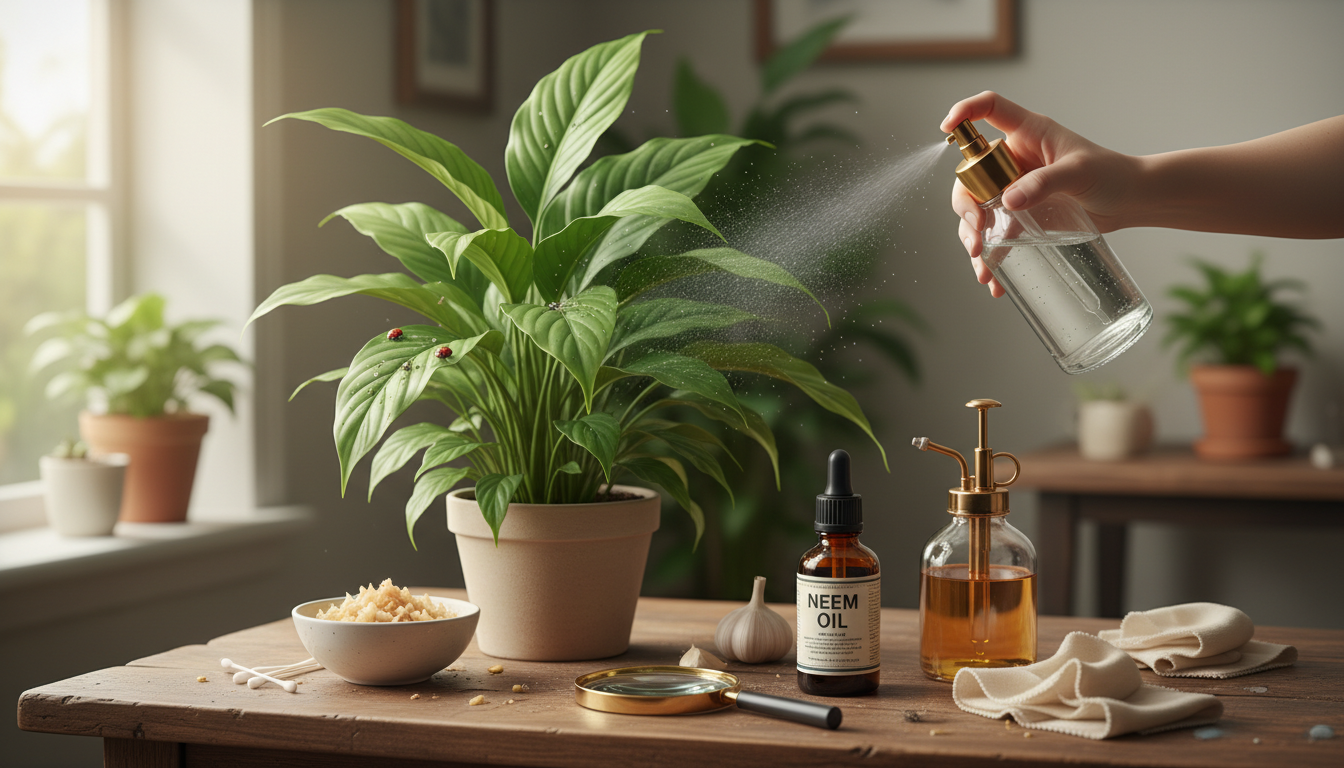
Chemical insecticides can be an effective solution for combating pests on houseplants; however, their use requires caution. In this section, we will discuss when and how to use chemical products, as well as the potential risks associated with their use.
When to Use Chemical Insecticides
- Severe infestation: If your plants are seriously affected by pests and natural methods are not yielding results, chemical products may be a necessary step.
- Resistant pests: Some insects, such as thrips and spider mites, may develop resistance to natural remedies, and in such cases, chemical insecticides may be more effective.
- Short-term solutions: If you need to quickly eliminate pests before a plant exhibition or sale, chemical products can help solve the problem in a short time.
How to Properly Apply Chemical Insecticides
- Read the instructions: Always carefully read the instructions on the package. This will help avoid improper application and protect your plants.
- Spray in the evening: It is best to apply insecticides in the evening when temperatures are lower, and sunlight will not cause burns on the leaves.
- Protect the environment: Use products in a well-ventilated area to minimize the impact of chemicals on pets and people.
Potential Risks
- Plant damage: Improper application or using overly strong products can harm your plants. Watch for signs of stress, such as wilting or yellowing leaves.
- Impact on pets: Many chemical products are toxic to pets. Ensure that your pets are safe during treatment.
- Environmental consequences: Chemical insecticides can negatively affect the environment. Consider using less toxic alternatives if possible.
Helpful Tips
- Combine methods: Use chemical insecticides in conjunction with natural methods for more effective pest control.
- Check plants: Regularly inspect plants for pests to respond to problems promptly.
- Observe safety precautions: Use gloves and masks during treatment to protect yourself from chemicals.
By following these recommendations, you can effectively use chemical insecticides while minimizing risks to your plants and pets.
Prevention: How to Avoid Pest Emergence
Preventing the emergence of pests is an important aspect of caring for houseplants. Proper care and maintaining cleanliness in the room will help you avoid many problems. Let’s look at some simple yet effective tips.
Regular Checks
Conducting regular checks of your plants will help identify pests at an early stage. Here are some tips:
- Inspect plants weekly: Pay attention to the underside of leaves and stems, where insects often hide.
- Use a magnifying glass: This will help you spot tiny pests like spider mites and thrips.
- Monitor the environment: Changes in conditions such as humidity and temperature can promote pest emergence.
Helpful Tips
- Maintain cleanliness: Regularly remove fallen leaves and debris to avoid attracting pests.
- Isolate new plants: Keep new plants away from others for a while to prevent the spread of potential pests.
- Check neighboring plants: If one plant is infested, check all others for signs of pests.