Roots on the Edge: Signs and Solutions for Root-Bound Plants
What is Root-Bound Condition?
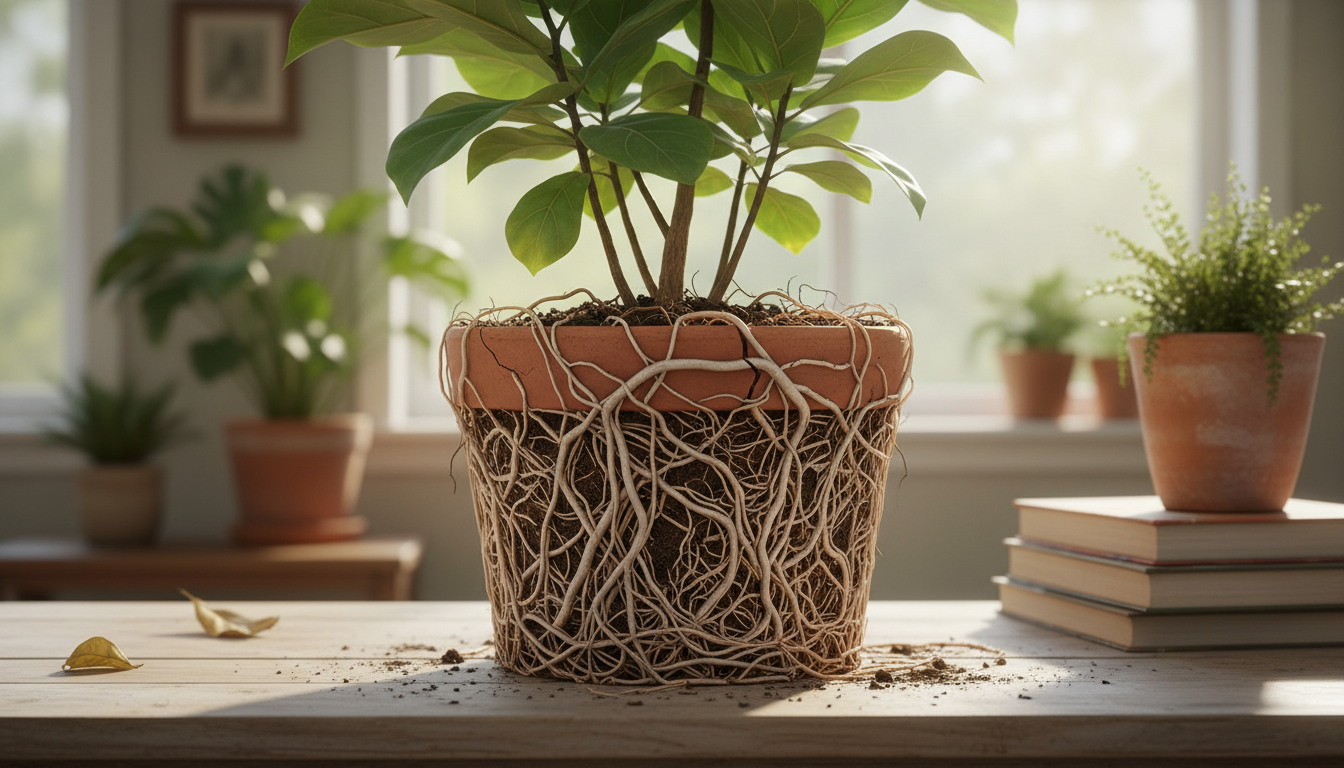
Root-bound condition is a state where a plant's roots become too cramped in their pot and start to coil around each other. This can lead to various problems affecting the health and growth of your green friend. Let's explore how this happens and why it's important.
How Root-Bound Condition Affects Plant Health
When a plant's roots fill the entire volume of the pot, they cannot get enough oxygen and nutrients. This can lead to stunted growth, yellowing leaves, and even the death of the plant. It's important to monitor the condition of the roots to take action in time.
Main Causes of Root-Bound Condition
- Inappropriate Pot Size: If the pot is too small for your plant, the roots will quickly fill its space.
- Infrequent Repotting: Some plants require repotting every 1-2 years. Skipping this step can lead to root-bound condition.
- Uneven Watering: If the plant receives too much or too little water, it can affect root development.
Tips to Prevent Root-Bound Condition
- Choose the Right Pot: Ensure that the pot is of adequate size and has drainage holes.
- Repot Plants Regularly: Monitor your plant's growth and repot it as needed.
- Control Watering: Make sure your plant receives the optimal amount of moisture.
By following these recommendations, you can avoid root-bound condition and maintain the health of your plants!
Signs of Root-Bound Condition
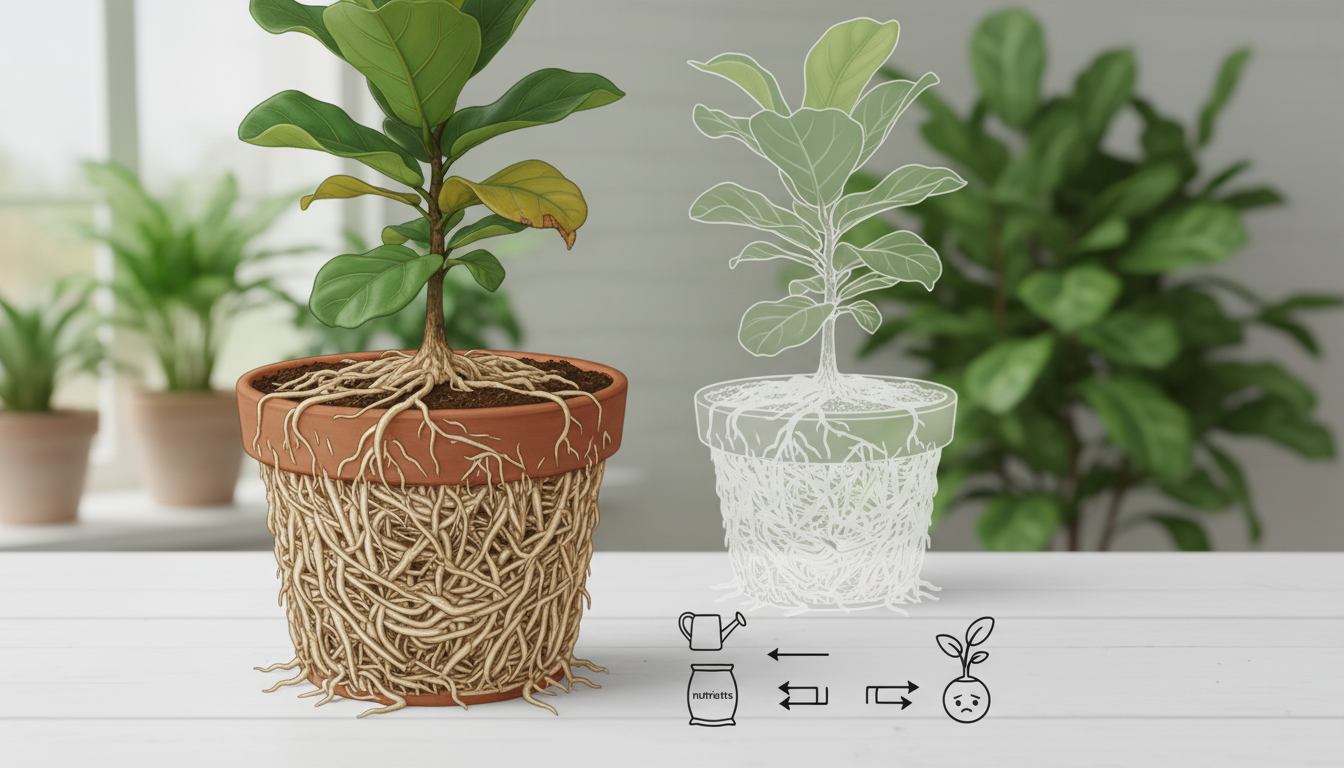
When your plant starts to experience root-bound condition, it may manifest in several noticeable signs. It's important to recognize them so you can take necessary actions in time.
Main Symptoms
- Stunted Growth: If your plant has stopped growing or its growth has significantly slowed down, this may be a signal of root-bound condition.
- Roots Coming Out of Drainage Holes: If you notice roots starting to come out of the drainage holes at the bottom of the pot, this is a clear sign that the plant needs repotting.
- Yellowing Leaves: Leaves may start to yellow or drop, which also indicates root issues and nutrient deficiency.
- Cracks on the Soil Surface: If the soil in the pot is cracking, this may indicate that the roots have filled all available space.
- Excessive Soil Dryness: Even with regular watering, the soil may dry out quickly as the roots cannot absorb water properly.
What to Do If You Notice Signs of Root-Bound Condition?
- Repot the Plant: If you discover one or more of the above signs, it's best to repot the plant into a larger pot with fresh soil.
- Loosen the Roots: When repotting, gently untangle the roots so they can start growing in a new direction.
- Ensure Good Drainage: Make sure the new pot has enough drainage holes and use quality potting mix.
Keep an eye on your plants' condition, and they will reward you with their health and beauty!
Why is Root-Bound Condition Harmful?
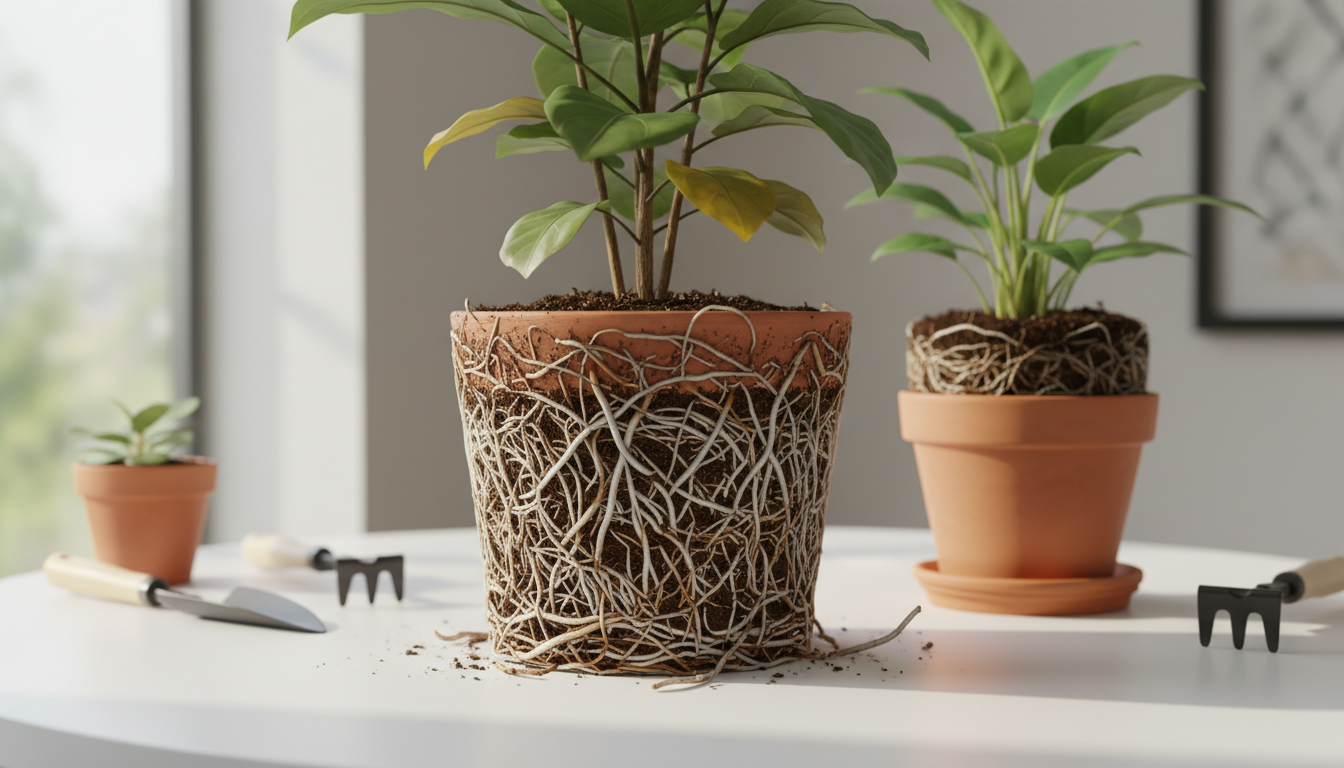
Root-bound condition can have serious consequences for your plant's health. When roots cannot grow and develop freely, it leads to numerous problems that can negatively affect their viability.
Impact on Water and Nutrient Absorption
When roots fill the entire volume of the pot, they cannot effectively absorb water and nutrients. This happens for several reasons:
- Lack of Oxygen: Roots need oxygen to breathe. When they are cramped, oxygen access is limited, which can lead to root rot.
- Competition for Resources: In dense roots, competition for water and nutrients occurs, making absorption difficult.
- Improper Moisture Balance: Roots in cramped conditions may not be able to maintain the necessary moisture level, leading to drying out or overwatering of the soil.
Overall Plant Viability
Root-bound condition not only affects growth but also the overall state of the plant. Here are some consequences:
- Reduced Immunity: As the plant does not receive the necessary nutrients, it becomes more vulnerable to diseases and pests.
- Yellowing and Dropping Leaves: Nutrient deficiency can lead to yellowing and dropping leaves, signaling stress.
- Reduced Flowering and Fruiting: If your plant does not receive enough resources, it will not bloom or bear fruit as it should.
How to Prevent the Harm of Root-Bound Condition
To avoid the negative consequences of root-bound condition, follow these simple recommendations:
- Regularly Check Roots: Occasionally take the plant out of the pot and inspect the roots for signs of crowding.
- Repot in Time: If you notice that the roots have filled the pot, do not delay repotting.
- Use Quality Soil: A good potting mix will help ensure proper drainage and aeration.
By monitoring the condition of the roots and taking measures to prevent root-bound condition, you can maintain the health of your plants and enjoy their beauty for many years!
Solutions for Root-Bound Plants
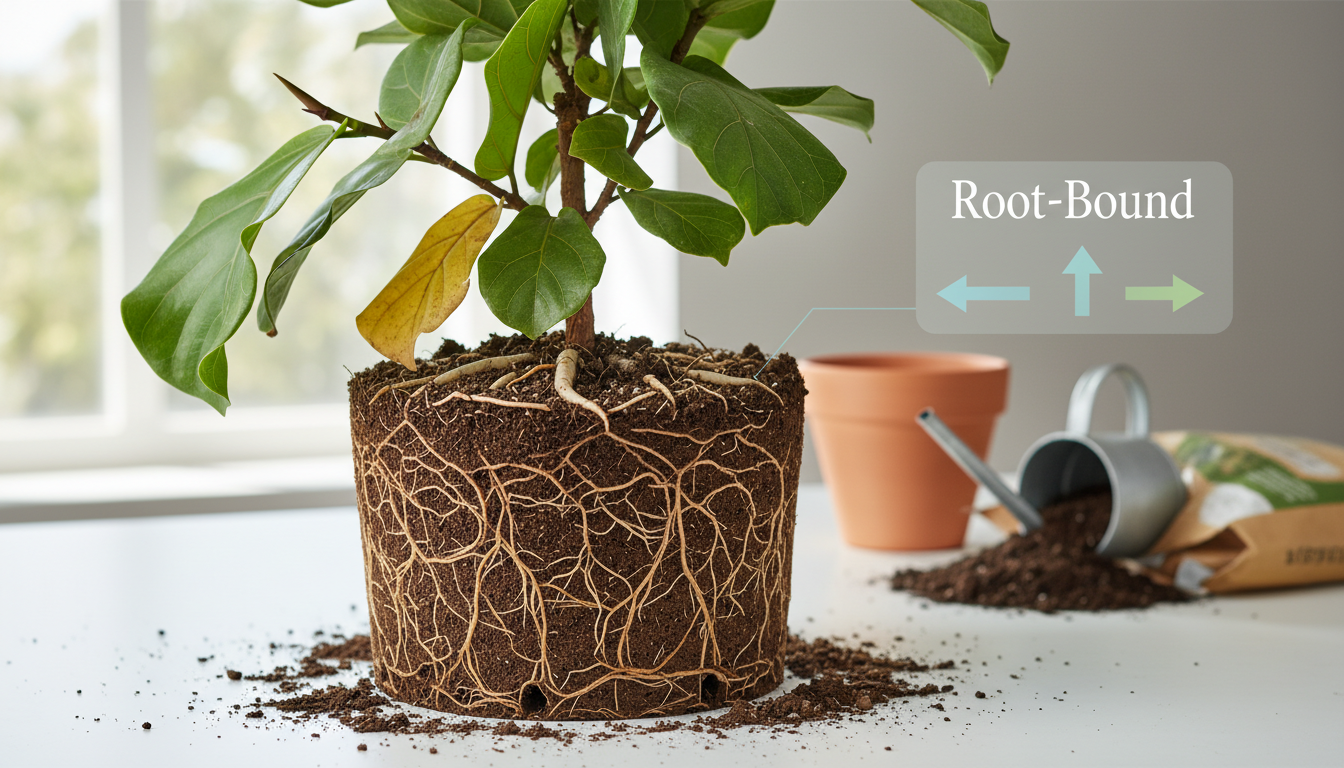
When your plant has become root-bound, it's important to take action quickly to restore its health. Here are some practical tips to help you tackle this problem.
How to Repot a Plant
- Choose the Right Time: The best time for repotting is spring or early summer when plants are actively growing.
- Prepare a New Pot: Ensure that the new pot is 2-3 cm larger in diameter than the old one. This will give the roots more space to grow.
- Clean the Roots: Gently remove the plant from the old pot and inspect the roots. If they are tightly coiled, untangle them by hand or with a clean knife.
Choosing the Right Pot
- Drainage Holes: Ensure that the new pot has sufficient drainage holes to prevent water stagnation.
- Material: Ceramic or plastic are good options. Ceramic retains moisture better, while plastic is easier to handle.
Improving Drainage
- Use a Drainage Layer: Place a layer of expanded clay or small gravel at the bottom of the pot. This will help prevent water stagnation.
- Proper Potting Mix: Choose soil with good aeration. Cactus mixes or special potting soils for houseplants may work well.
- Regular Watering: Monitor watering after repotting. Ensure that the soil does not dry out but also does not become too wet.
Helpful Tips
- Monitor Root Condition: Regularly check the roots for signs of root-bound condition to take action in time.
- Do Not Repot Too Often: Repotting once every 1-2 years is optimal for most houseplants.
- Pay Attention to Conditions: Ensure that your plants are in suitable lighting and temperature conditions to promote healthy growth.
By following these recommendations, you can successfully deal with root-bound condition and ensure your plants have a long and healthy life!
Preventing Root-Bound Condition
To avoid root-bound condition in the future, it's important to care for your plants properly from the start. Here are some helpful tips to help you maintain the health of your green friends.
Regular Repotting
- Plan Repotting: Repot plants every 1-2 years, especially if they grow quickly. This will help prevent roots from filling the pot.
- Pay Attention to Pot Size: Choose pots that are 2-3 cm larger in diameter than the previous ones. This will give the roots more space to grow.
Proper Watering
- Avoid Overwatering: Ensure that the soil does not remain too wet. This will help prevent root rot.
- Monitor Drainage: Use pots with drainage holes and ensure a good drainage layer at the bottom.
Choosing Potting Mix
- Use Quality Materials: Choose potting mixes with good aeration. Special mixes for houseplants or cacti will work well.
- Add Perlite or Vermiculite: This will help improve drainage and aeration of the soil.
Lighting and Temperature
- Regularly Check Conditions: Ensure that your plants receive enough light but are not in direct sunlight, which can dry out the soil.
- Monitor Temperature: Different plants have different temperature requirements. Maintain the optimal temperature range for your specific plant.
General Tips
- Regularly Check Roots: Occasionally take the plant out of the pot and inspect the roots for signs of crowding.
- Don’t Forget About Fertilizing: Fertilize plants during the active growth period to provide them with the necessary nutrients.
By following these simple recommendations, you can prevent root-bound condition and maintain the health of your plants for many years!