Caring for Epipremnum: A Complete Guide to Taking Care of Your Pothos
Basics of Pothos Care
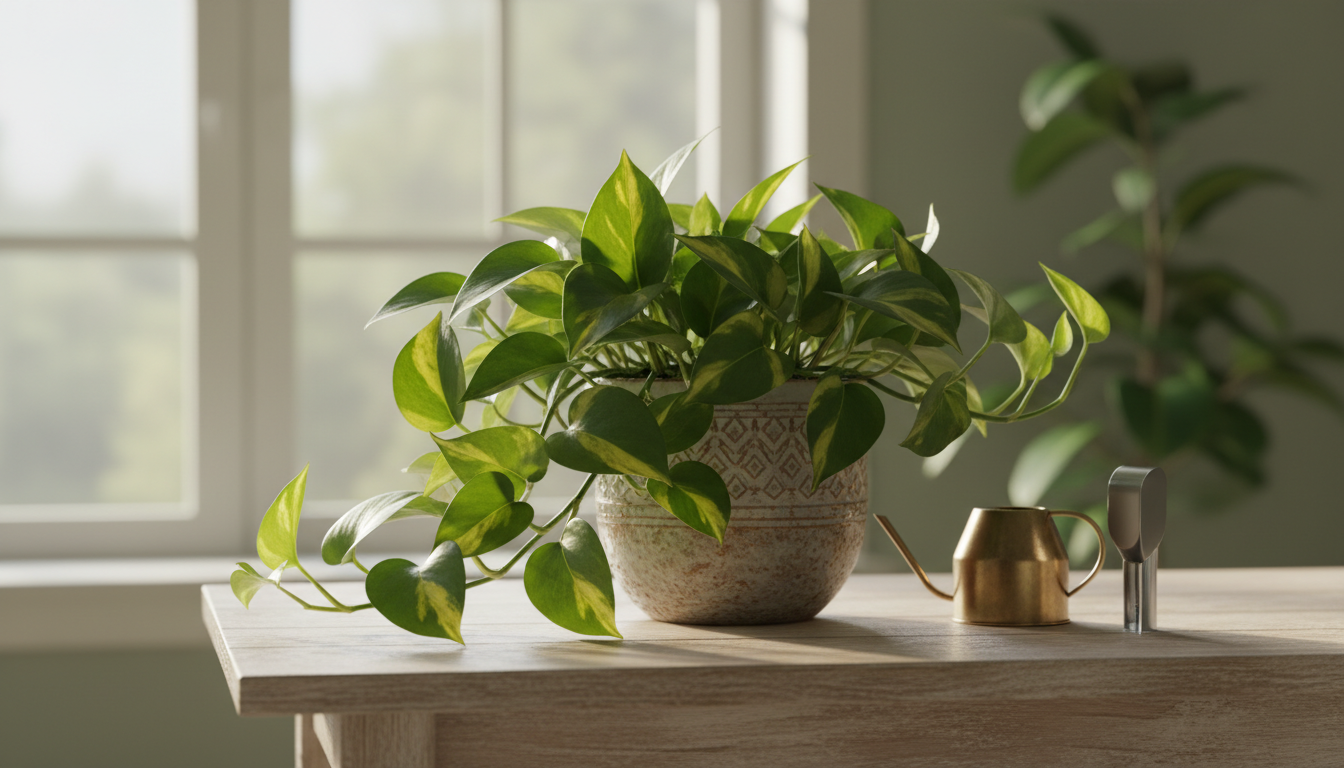
Epipremnum, more commonly known as Pothos, is one of the most popular houseplants due to its hardiness and ability to purify the air. Let’s break down the main aspects of caring for your Pothos, including pot and soil selection, as well as the importance of drainage.
Choosing a Pot
The right pot is the first step to a healthy plant. Here are some recommendations:
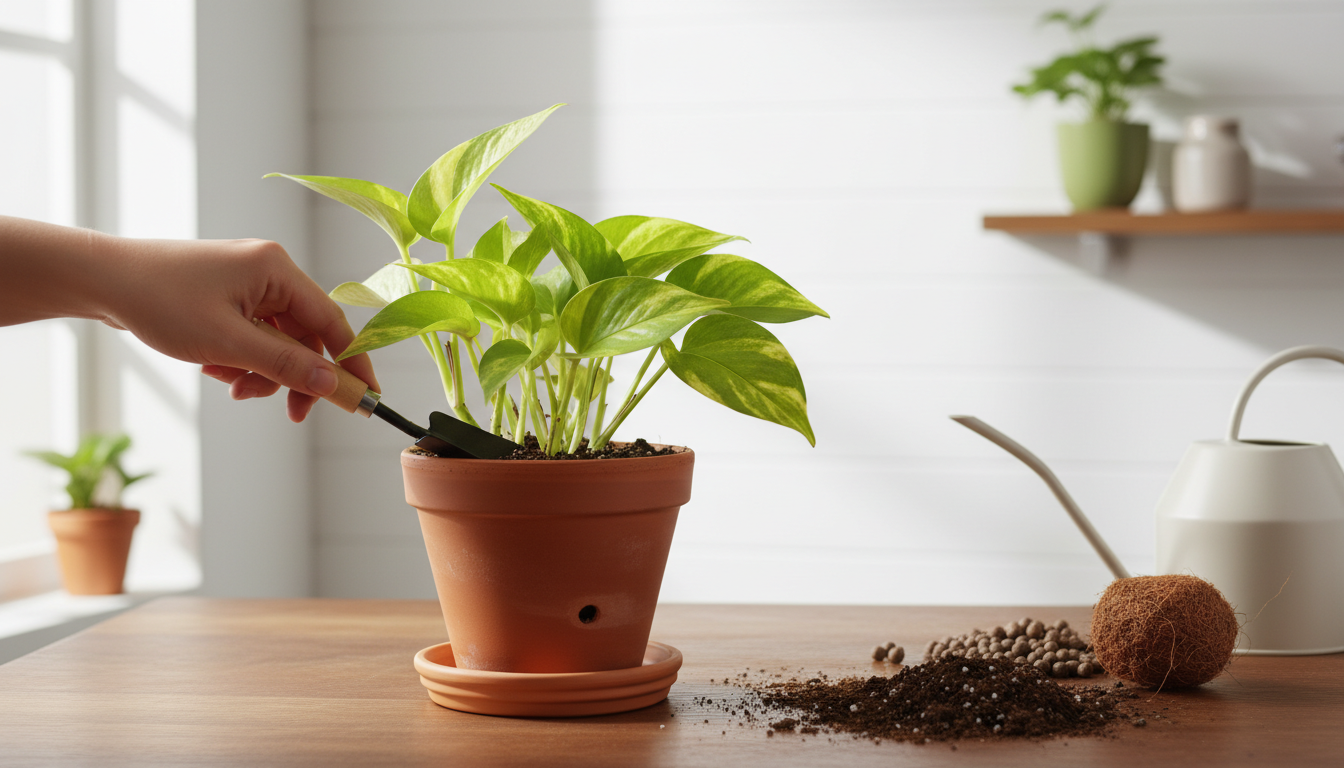
- Material: Clay or plastic pots are suitable, but clay pots retain moisture better and promote natural root ventilation.
- Size: Choose a pot that is 2-3 cm wider than the previous one. This will give the roots space to grow without overloading the plant.
Soil
Pothos prefers light and breathable soil. Here’s what to consider:
- Mix: Use a general-purpose potting mix, adding some perlite or vermiculite to improve drainage.
- pH: Pothos prefers a neutral pH (between 6 and 7). If you’re unsure, you can use pH testers available at gardening stores.
Importance of Drainage
Be sure to pay attention to drainage:
- Holes: Ensure that the pot has drainage holes to avoid water stagnation.
- Saucer: Use a saucer to catch excess water, but do not let the roots sit in water, as this can lead to rot.
Helpful Tips
- Regular Checking: Check the soil moisture before watering. Pothos prefers the top layer of soil to dry out slightly.
- Fertilize: Feed Pothos with houseplant fertilizer once a month during the spring-summer period.
By following these simple recommendations, you can create the ideal conditions for your Pothos and enjoy its green shoots for a long time!
Watering: How to Avoid Overwatering and Underwatering Pothos
Proper watering is a key aspect of caring for your Pothos. This plant, although hardy, requires careful attention to its watering regime to avoid root problems.
Watering Frequency
The frequency of watering Pothos depends on several factors, such as temperature, humidity, and pot size. In general, follow these recommendations:
- Summer: Water once every 1-2 weeks. In hot months, the soil may dry out faster.
- Winter: Reduce the frequency to every 2-3 weeks, as the plant slows its growth during this period.
Signs of Water Deficiency or Excess
By knowing the signs, you can adjust your watering regime in time:
Signs of Water Deficiency:
- Dry Leaf Tips: If the tips of the leaves start to brown and dry out, this may signal a lack of moisture.
- Leaf Drop: Leaves may begin to fall if the plant is lacking water.
Signs of Excess Water:
- Yellowing Leaves: If the leaves start to yellow and drop, this may indicate overwatering.
- Root Rot: If the roots are black and soft, this indicates rot caused by water stagnation.
Helpful Watering Tips
- Check the Soil: Always check the top layer of soil before watering. If it’s dry to a depth of about 2 cm, it’s time to water.
- Use Drainage: Ensure that the pot has drainage holes to avoid water stagnation.
- Water with Room Temperature Water: Use water at room temperature to avoid shocking the roots.
By following these simple recommendations, you can maintain the optimal moisture level for your Pothos, which in turn will ensure its healthy growth and beautiful appearance!
Lighting for Healthy Pothos Growth
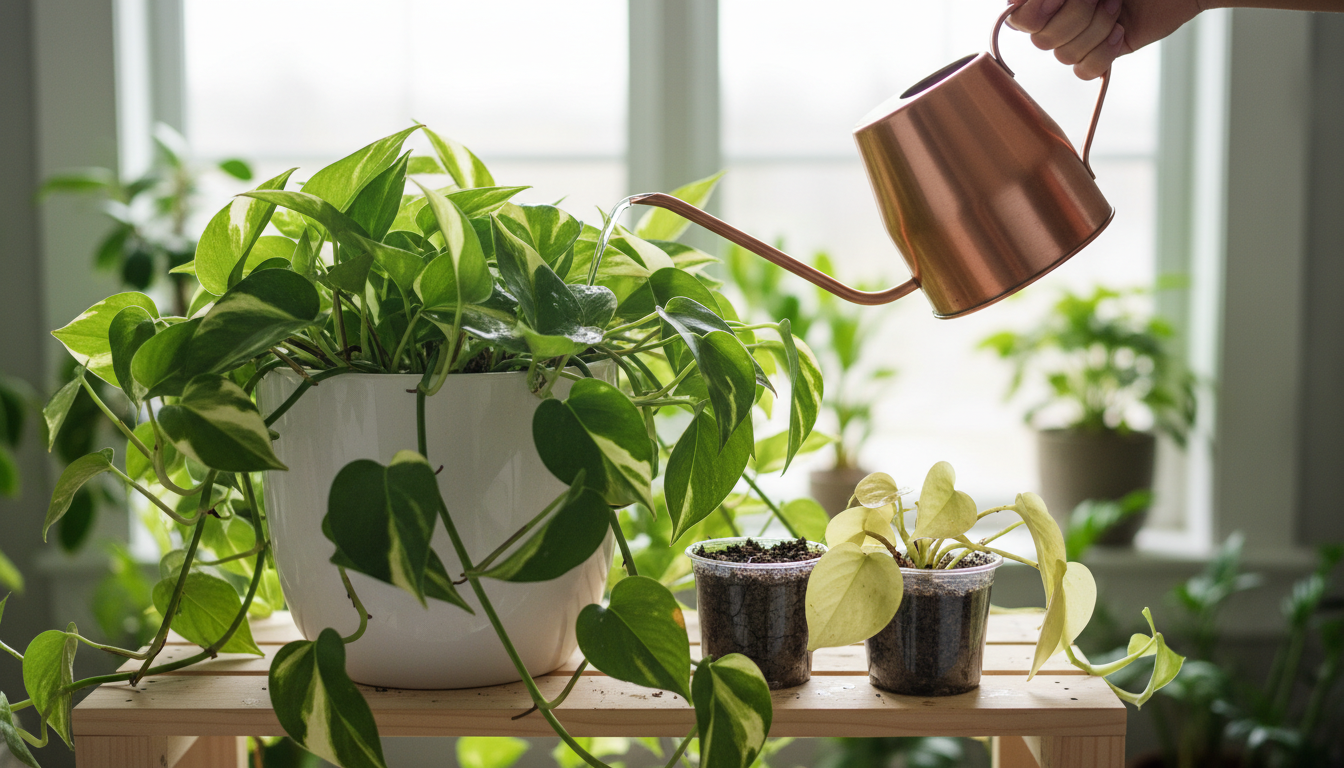
Epipremnum is a plant that adapts well to various lighting conditions, but choosing the right spot still plays an important role in its health and beauty. Let’s explore how to choose the ideal lighting for your Pothos.
Ideal Lighting Conditions
Pothos prefers bright but indirect light. Here are the main points to consider:
- Bright, Indirect Light: This is ideal for Pothos. If you have a window facing east or west, that would be a great spot.
- Partial Shade: Pothos can also grow in partial shade, but in this case, its growth may slow down, and the leaves will become less vibrant.
- Avoid Direct Sunlight: Direct sunlight can scorch the leaves, so it’s better to place the plant away from the window or use curtains to diffuse the light.
How to Choose a Spot in Your Home
When choosing a spot for your Pothos, keep the following tips in mind:
- Check Light Levels: Observe how light enters different parts of the room throughout the day. The ideal spot is where the light is bright but not too harsh.
- Move the Plant Regularly: If you notice that the leaves start to yellow or lose vibrancy, try moving the Pothos to a brighter location.
- Don’t Forget About Height: Place Pothos at eye level so you can easily monitor its condition and make necessary adjustments.
Adapting to Different Light Levels
Pothos is a very flexible plant and can adapt to various light levels. If you want your plant to grow healthy and beautiful, here are some tips:
- Gradual Acclimatization: If you decide to move Pothos from a dark place to a brighter one, do it gradually. Start with a few hours a day and gradually increase the time spent in bright light.
- Watch for Changes: Pay attention to the leaves: if they start to yellow or curl, the plant may be getting too much light.
By following these recommendations, you can create ideal lighting conditions for your Pothos, helping it to grow healthy and beautiful!
Fertilizing: When and How to Feed Pothos
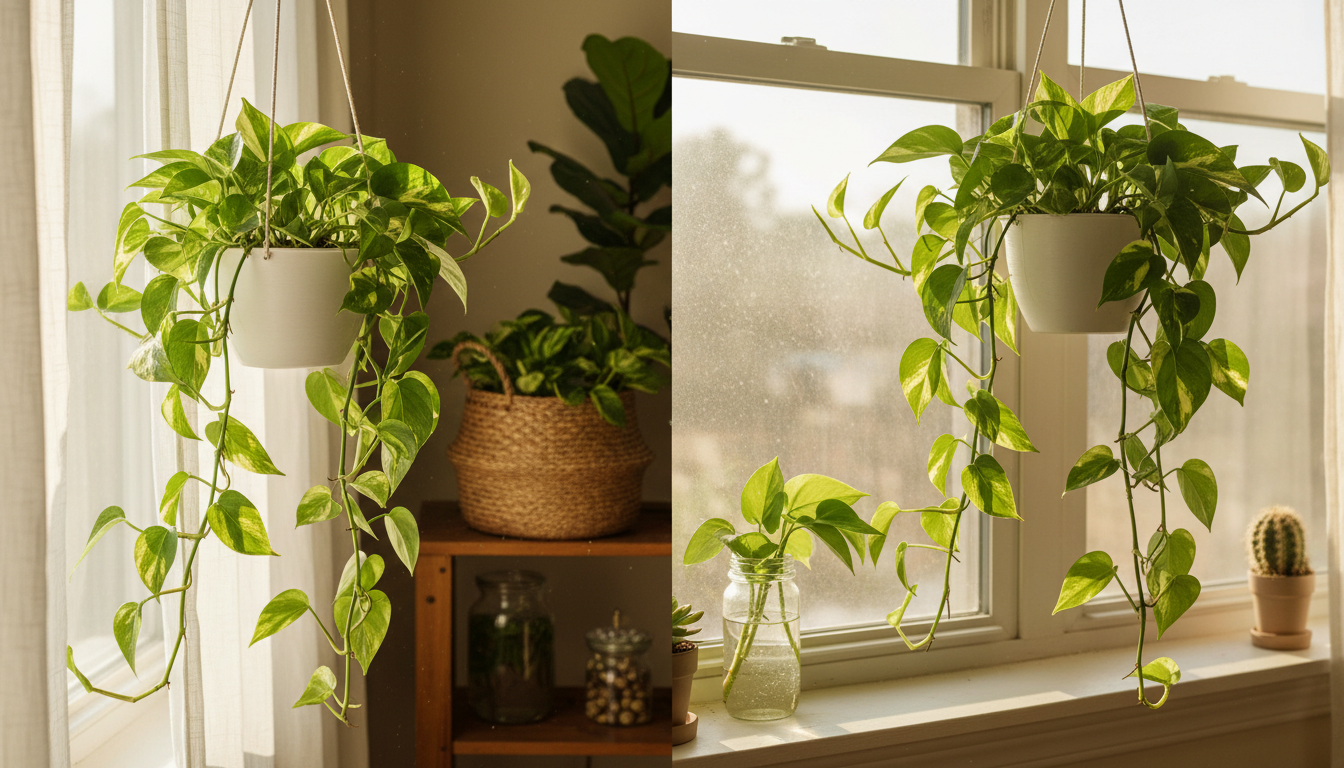
Fertilizing Pothos is an important aspect of plant care that will help it grow healthy and beautiful. Proper fertilization will provide your Pothos with all the necessary nutrients.
Recommendations for Choosing Fertilizers
When selecting fertilizers for Pothos, consider several factors:
- Type of Fertilizer: Use a balanced houseplant fertilizer with equal parts nitrogen, phosphorus, and potassium (for example, 10-10-10). This will ensure comprehensive nutrition.
- Form of Fertilizers: You can choose liquid fertilizers for convenience or granular ones for long-lasting effects. Liquid fertilizers are absorbed faster, while granular ones act more slowly.
Fertilizing Frequency
Fertilizing frequency depends on the season and the plant's condition:
- Spring and Summer: During this active growth period, feed Pothos once a month. This will help the plant obtain the necessary nutrients for growth.
- Fall and Winter: During this time, growth slows down, so fertilizing Pothos should be done less frequently — every 2-3 months or even stop fertilizing altogether.
Signs of Nutrient Deficiency
It’s important to recognize the signs of nutrient deficiency to respond in time:
- Yellowing Leaves: This may indicate a lack of nitrogen. Leaves become pale, and older leaves turn yellow.
- Slow Growth: If your plant isn’t growing as actively as before, this may be a sign of nutrient deficiency.
- Small or Deformed Leaves: This may indicate a lack of potassium or other micronutrients.
Helpful Tips
- Don’t Overdo It: Excess fertilizer can harm the plant. It’s better to underfeed than to overfeed.
- Dilute Fertilizers: If using liquid fertilizer, always dilute it in water according to the instructions on the package. This will help avoid root burns.
- Monitor the Plant: Regularly check the condition of the leaves and the overall appearance of Pothos. This will help you adjust the fertilizing regime in time.
By following these recommendations, you can provide your Pothos with all the necessary conditions for healthy growth and a beautiful appearance!
Problems and Diseases: How to Recognize and Treat
Pothos, like any other plant, can encounter various problems and diseases. Knowing the main symptoms and treatment methods will help you maintain its health and beauty.
Common Problems
Pests
Pothos can be infested with various pests. Here are the most common ones:
- Spider Mites: These tiny insects leave webs on the leaves. Signs of infestation include yellowing and discolored leaves.
- Aphids: Small insects that suck the plant's sap. Leaves may curl and turn yellow.
- Scale Insects: These pests look like small brown dots on stems and leaves. They also suck sap and can weaken the plant.
Diseases
Pothos can suffer from various diseases caused by fungi or bacteria. Here are some of them:
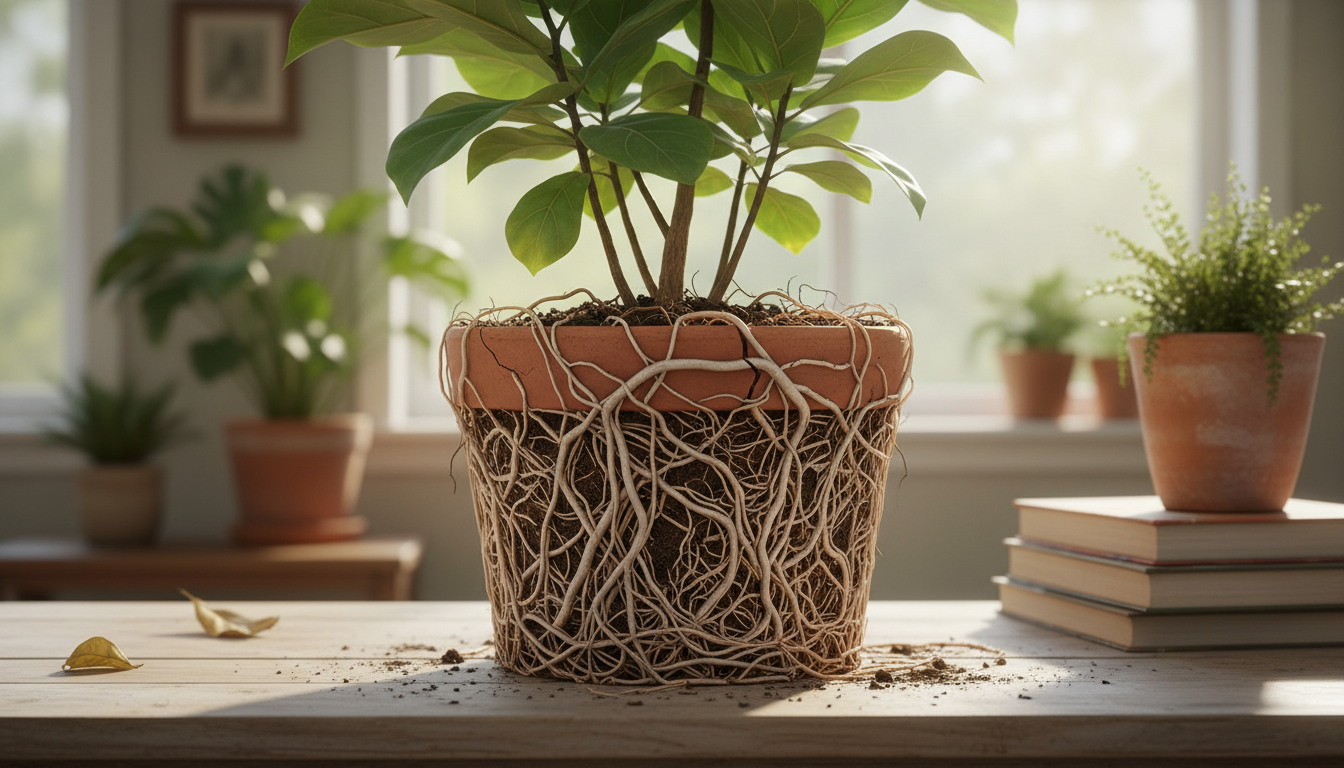
- Root Rot: This can occur due to overwatering. Signs include black, soft roots and yellowing leaves.
- Powdery Mildew: A white powdery coating on the leaves indicates a fungal infection. This can lead to wilting and leaf drop.
How to Deal with Problems
Pest Control Methods
- Mechanical Removal: Manually remove pests using a damp cloth.
- Soap Solution: Prepare a solution of water and liquid soap (1-2 tablespoons per liter of water) and spray the plant.
- Insecticides: In case of severe infestation, use specialized products, following the instructions on the package.
Treating Diseases
- Root Rot: Remove affected roots and repot the plant in fresh soil with good drainage.
- Powdery Mildew: Remove affected leaves and treat the plant with a fungicide.
Helpful Tips
- Regular Inspection: Check the plant for pests and diseases at least once a week.
- Proper Watering: Avoid overwatering to prevent root rot.
- Cleanliness: Keep the leaves clean from dust to improve photosynthesis and reduce the risk of diseases.
By following these recommendations, you can quickly identify and address problems with your Pothos, ensuring it remains healthy and beautiful!