Care for Snake Plant for Beginners: Simple Tips
What is a Snake Plant?
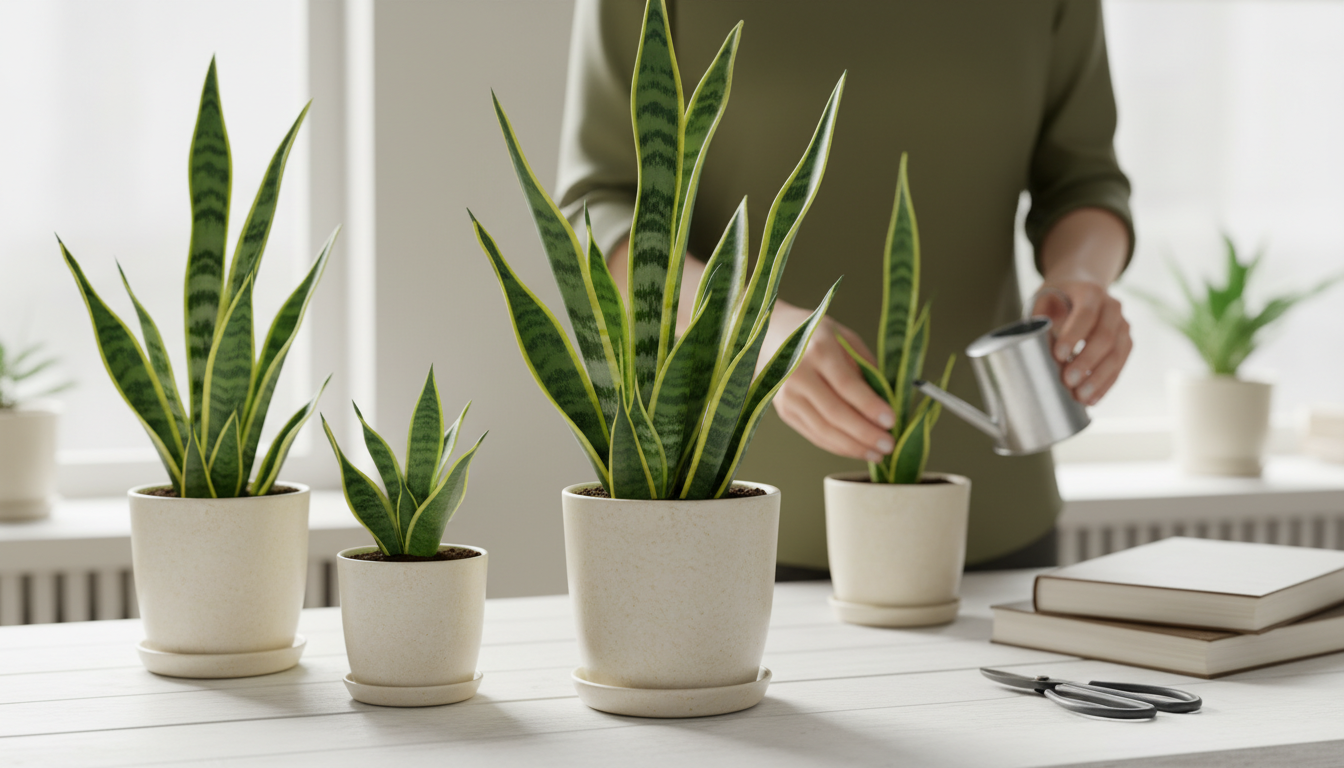
The snake plant, or sansevieria, is one of the most popular houseplants that has won the hearts of gardeners around the world. It attracts attention not only with its unusual appearance but also with its ease of care. Let’s take a closer look at its origin, varieties, and reasons for its popularity.
Origin and Varieties
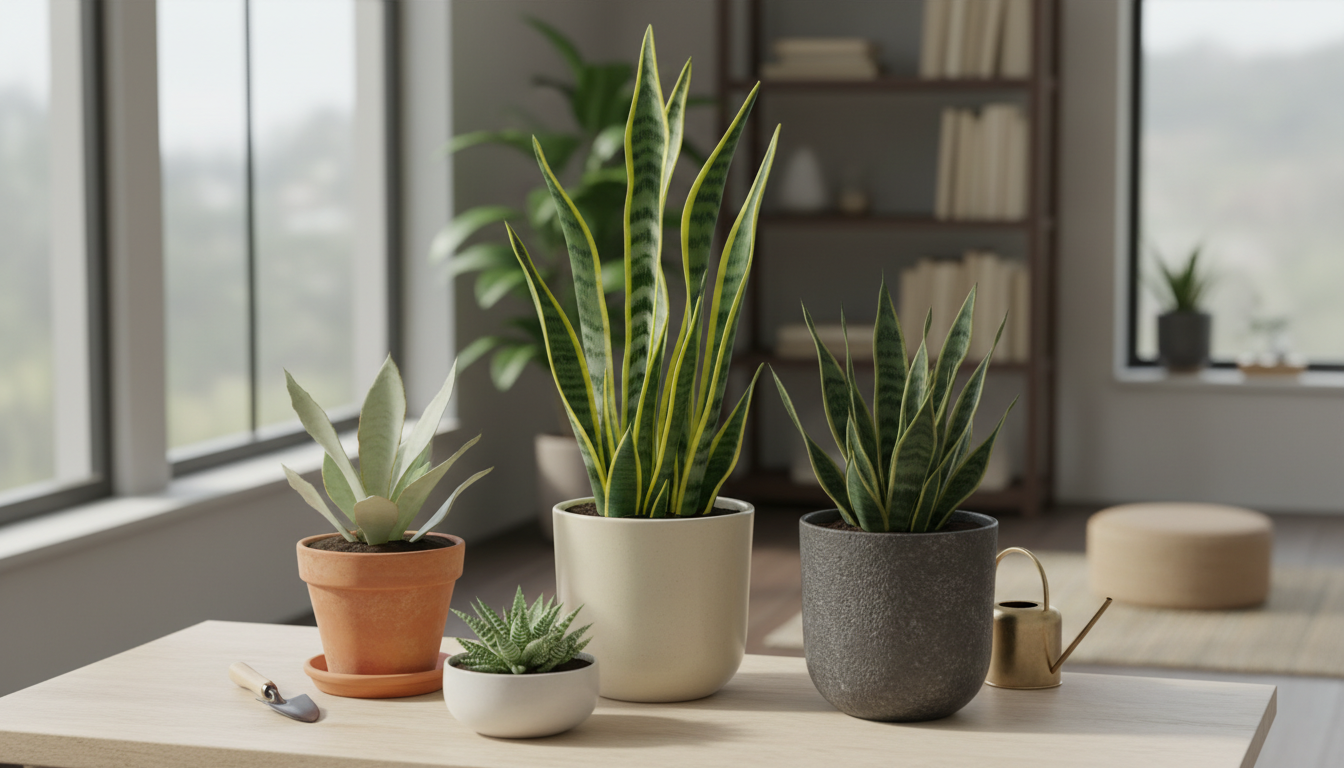
Sansevieria originates from the tropics of Africa and Asia, where it grows in conditions of low humidity and bright sunlight. There are many varieties of snake plants, among which the most well-known are:
- Sansevieria trifasciata — with bright green leaves adorned with yellow stripes.
- Sansevieria hahnii — a compact form, perfect for small spaces.
- Sansevieria cylindrica — with round-shaped leaves that add an exotic touch to the interior.
Why They Are Popular Among Beginner Gardeners
The snake plant has become a real hit among beginner gardeners for several reasons:
- Hardiness: Sansevieria easily tolerates various conditions, including low light and irregular watering.
- Air Purification: This plant is not only beautiful but also beneficial — it helps purify the air from toxins.
- Longevity: Sansevieria can grow for many years without requiring special attention.
- Aesthetics: Elegant leaves and a variety of shapes make it a true decoration for any interior.
If you are just starting your journey in the world of houseplants, the snake plant is an excellent choice. It will be your reliable companion and add greenery to your home.
Optimal Conditions for the Plant
To ensure your snake plant grows healthy and beautiful, it is important to create optimal conditions for it. Let’s look at the key aspects that will help you with this.
Temperature and Humidity
The snake plant prefers warmth and moderate humidity. Here are some recommendations:
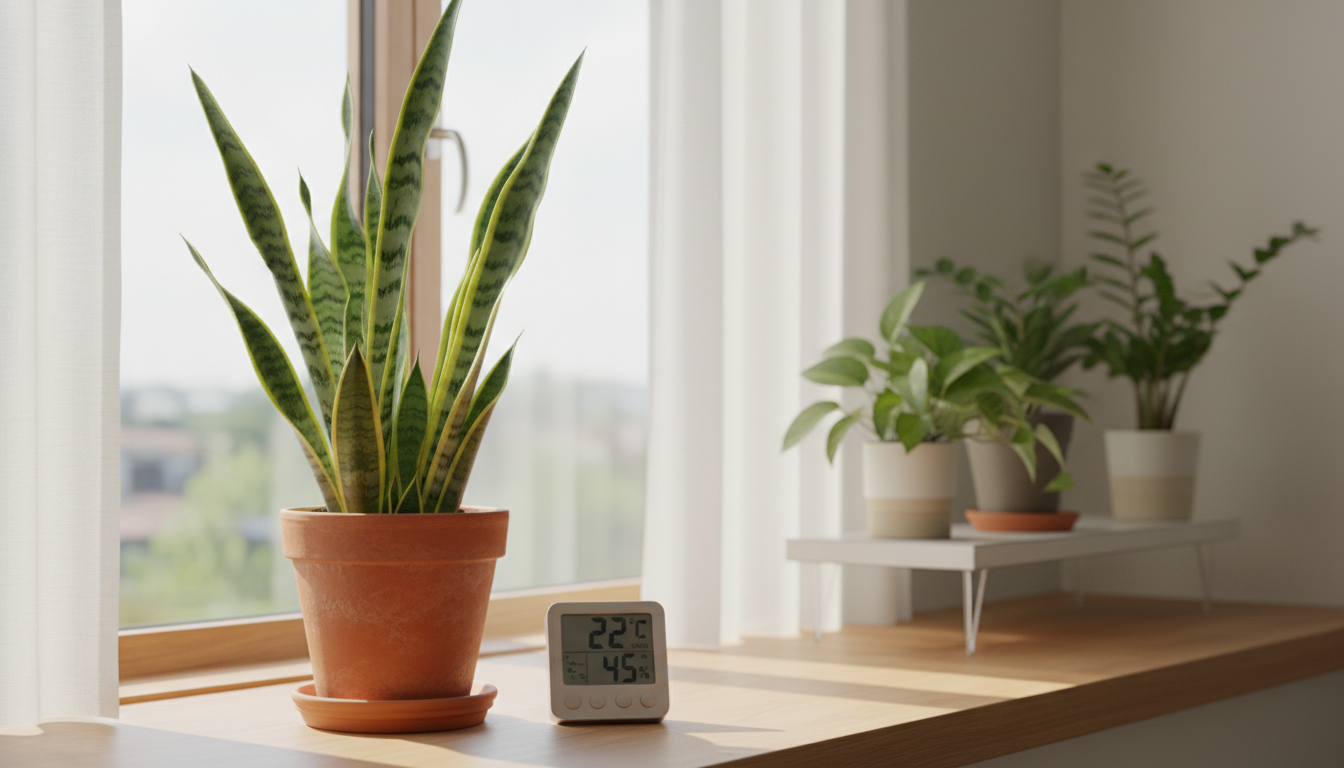
- Temperature: The ideal temperature range for sansevieria is between 18 and 27 degrees Celsius. Try to avoid sharp temperature fluctuations, especially below 10 degrees.
- Humidity: This plant does not require high humidity, so it feels great in normal apartment conditions. If your air is too dry, you can occasionally mist the leaves, but don’t overdo it to avoid root rot.
Suitable Place in the House
Choosing a place for your snake plant plays an important role in its growth and development. Here are some tips:
- Lighting: Sansevieria prefers bright but diffused light. It can adapt to partial shade, but in too dark a place, its growth may slow down. It’s best to place the plant near a window but not in direct sunlight.
- Ventilation: Ensure good air circulation around the plant. This will help prevent the appearance of mold and other diseases.
Helpful Tips
- Regularly check the condition of the leaves: if they start to yellow or wilt, this may be a sign of improper care.
- Don’t forget about the saucer: if you water the plant, make sure excess water can drain freely to avoid root rot.
By following these simple recommendations, you will create ideal conditions for your snake plant, and it will delight you with its beauty for many years!
Watering: How Not to Confuse
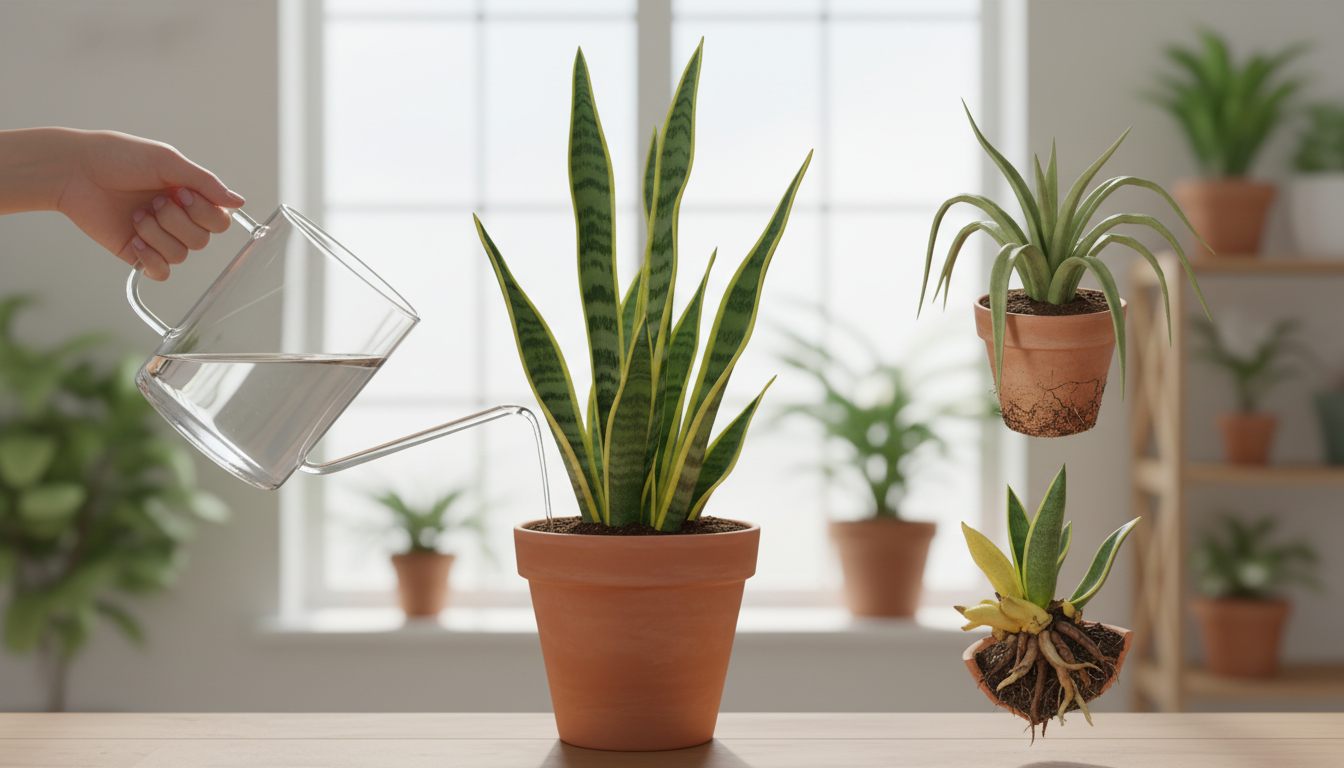
Proper watering is a key aspect of caring for the snake plant. This plant, while hardy, still requires attention to its watering regime to avoid root rot and other problems. Let’s figure out how to water sansevieria correctly.
How Often to Water
The snake plant prefers moderate watering. The main rule is better to underwater than overwater. Here are some tips on watering frequency:
- Summer: During the warm season, water the plant about once every 2-3 weeks. If the air in your home is dry, you may need to water a little more often.
- Winter: In the cold season, reduce watering to once a month. During this period, the plant slows down its growth and requires less moisture.
Signs of Insufficient or Excess Moisture
It is important to recognize the signals your plant sends. Here are some signs to watch for:
-
Lack of moisture:
- Leaves become dry and brittle.
- Leaf tips start to turn brown.
- The plant may start shedding leaves.
-
Excess moisture:
- Leaves turn yellow and wilt.
- Rot may appear at the base of the stem.
- A musty smell from the pot.
Helpful Tips
- Check the soil: Before watering, check the top layer of soil for dryness. If it is dry to a depth of 2-3 cm, you can water.
- Use drainage: Ensure that the pot has drainage holes so that excess water can drain freely.
- Water choice: It’s best to use settled or rainwater. This helps avoid chlorine and other chemical additives that may harm the plant.
By following these simple recommendations, you can provide your snake plant with optimal moisture levels and keep it healthy for many years!
Lighting: Find the Golden Mean
Proper lighting is the key to the health of your snake plant. This plant is quite adaptable, but it still has its preferences. Let’s figure out what types of lighting are suitable for sansevieria and how to adapt the plant to your home conditions.
Different Types of Lighting
- Bright, diffused light: The ideal option for the snake plant. It will grow actively and delight you with its greenery.
- Partial shade: Sansevieria can adapt to partial shade conditions, but growth will slow down, and the leaves may become less vibrant.
- Direct sunlight: Avoid it, as it can scorch the leaves and lead to wilting.
How to Adapt the Plant to Your Home Conditions
- Gradual acclimatization: If you bought a plant and want to move it to a brighter spot, do it gradually. First, place it for a few hours a day in the new spot, increasing the time spent in the light.
- Check the condition: Regularly inspect the leaves. If they start to yellow or burn, your plant may need more shade.
- Change location depending on the season: In summer, when the light is more intense, it may be necessary to move the plant to a more shaded spot, while in winter — closer to the window.
Helpful Tips
- Use reflective surfaces: To improve lighting, place the plant near a mirror or light-colored walls that will reflect light.
- Regularly rotate the pot: This will help the plant receive even lighting from all sides and prevent stem bending.
By following these simple recommendations, you will provide your snake plant with ideal conditions for growth and development!
Fertilizing and Feeding
Fertilizing and feeding are important aspects of caring for your snake plant. Proper nutrition will help sansevieria grow healthy and beautiful. Let’s discuss how and when to feed your plant, as well as which fertilizers are best to use.
How and When to Feed
-
Feeding frequency:
- In spring and summer, during the active growth period, it is recommended to feed the plant once a month.
- In autumn and winter, when growth slows down, you can reduce feeding to once every two to three months.
-
When to start:
- Start feeding sansevieria in April when spring growth begins. If your plant has just been repotted, give it time to adapt before introducing fertilizers.
Best Fertilizers for Sansevieria
Sansevieria does not require complex fertilizers, but there are several options that will work well:
- Fertilizers for cacti and succulents: These fertilizers contain the necessary micronutrients and are ideal for the snake plant.
- Liquid fertilizers: They are easily absorbed by the plant and allow for precise dosage control.
- Organic fertilizers: For example, compost or herbal infusions are an excellent choice for those who prefer natural methods.
Helpful Tips
- Don’t overdo it: Excess fertilizers can lead to root burns and other problems. Always follow the instructions on the package.
- Dilute fertilizers: If you are using concentrated fertilizers, be sure to dilute them in water to avoid damaging the roots.
- Watch the plant: If the leaves start to yellow or grow slowly, this may be a sign of nutrient deficiency.